
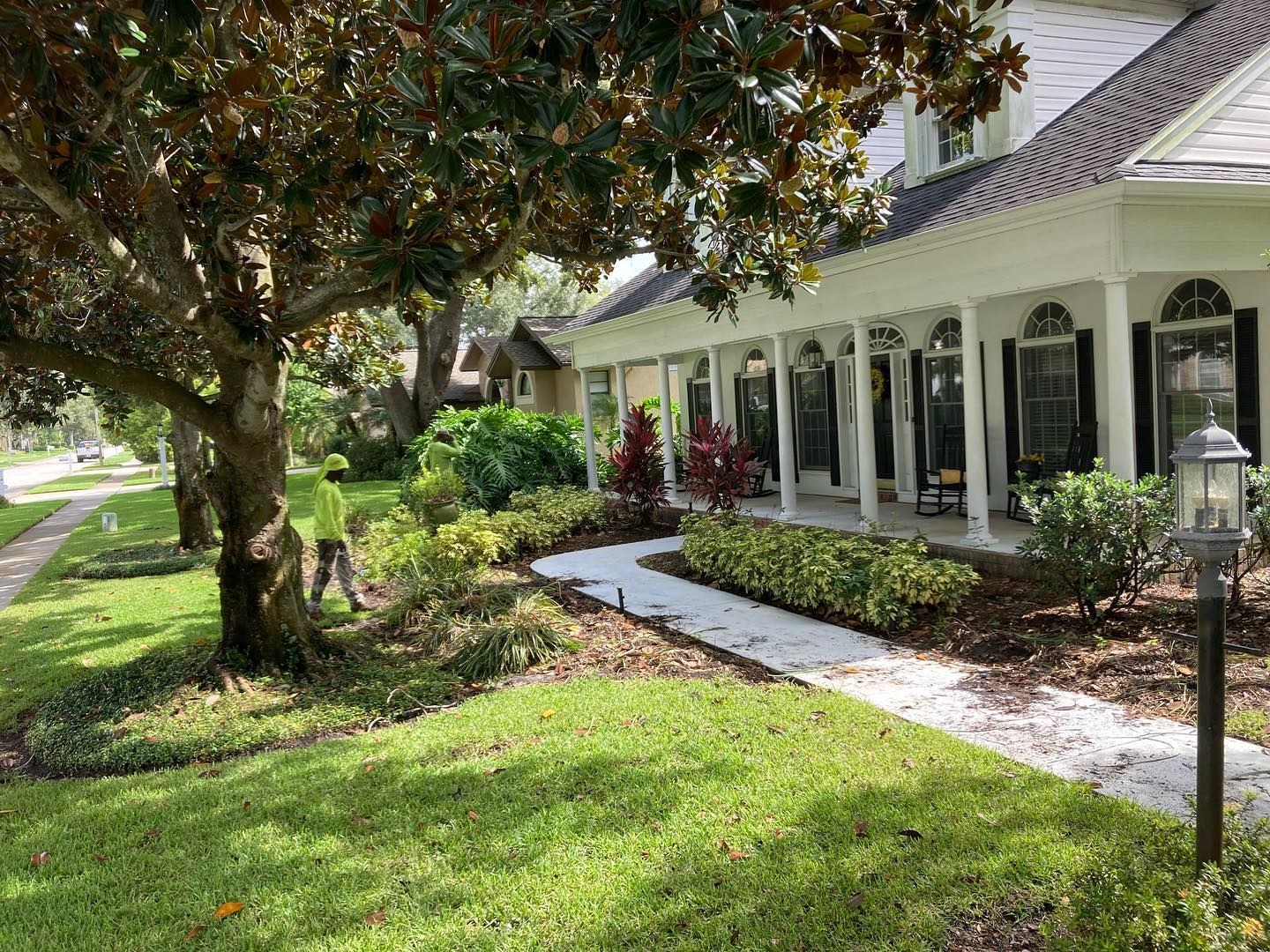
Landscaping design is the plan that decides where everything in your yard goes before anything goes in the ground. Plants, paths, patios, lighting, sprinklers, shade, and privacy all get worked out together, so each piece helps the others. A path leads somewhere worth going. The lights land on the palm you actually want to see at night. The sprinklers water the beds without soaking the pavers.
Landscapers that only focus on plants don't give you a design. They don't give you a vision. They give you plants.
Here's what happens when you piecemeal it together with different companies.
Those pieces get added one at a time, years apart; you can usually tell. The patio has no shade, the lights were an afterthought, and the irrigation fights the new beds. When they're planned together, the yard feels like it was always meant to look that way.
After more than 25 years designing and building yards across Tampa Bay, here's how we think about each part of a landscaping design, and how the parts fit together.
What a landscaping design includes
A complete design for a Florida yard usually covers:
- Plants: trees, palms, shrubs, groundcovers and lawn, chosen for your sun, soil and how much upkeep you want.
- Hardscape: paths, patios, pool decks, fire pits, retaining walls and outdoor kitchens.
- Water: irrigation zones, sprinkler and drip layout, and drainage for our summer storms.
- Lighting: what gets lit, how the wire gets there, and how it's controlled.
- Privacy and boundaries: fence lines, gates, hedges, and living screens.
- Shade and gathering spots: tiki huts, shade trees, and covered seating.
You don't need all of it at once. A good design shows you the whole picture and then gives you options for what to do first.
It starts with a walk around your yard
Every design we do starts on site with one of our landscape designers. One designer walks your property, draws your plan, and stays with the project through the final cleanup, so you're never passed between people.
On that walk we're looking at things a photo can't show:
- Where the sun hits in the morning, at midday and at dinnertime.
- Where water goes after a heavy afternoon rain.
- What you see from your kitchen window and your back door.
- How you actually move through the yard, from the driveway to the front door, the back door to the pool, the patio to the side gate.
- What your HOA allows, if you have one.
- What you love about the yard now, and what drives you crazy.
One of our customers, Chris, described it well in a review after we rebuilt their yard following a pool installation: "They came up with a beautiful design and they walked the property, explaining the choices and plant positions to verify that we were satisfied."
That walk is also where options come in. For most yards we'll talk through a few directions, like a simple refresh of the front beds, a full front-and-back redesign, or a plan you can install in phases over a couple of years.
Plants: the living part of the plan
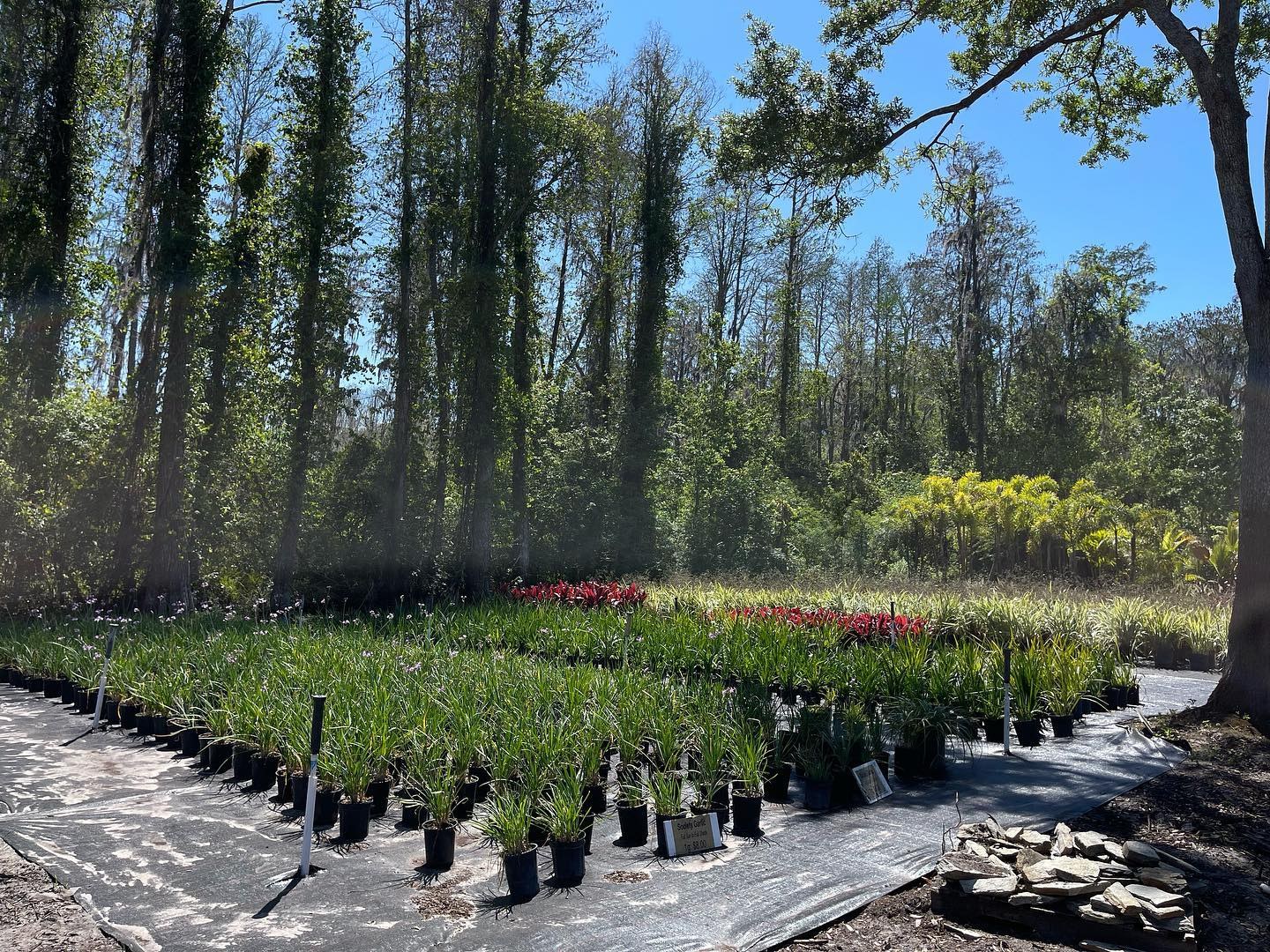
The University of Florida's Florida-Friendly Landscaping program puts "right plant, right place" first on its list of principles, and it's the rule we design by. A plant that fits its spot at full size never needs to be sheared back from the windows. A plant that likes the sun and soil it's given doesn't need extra water and fertilizer to look good.
In a design, that means:
- Choosing for mature size. We plan for what a shrub or tree will be in five to ten years.
- Layering. Low groundcovers in front, mid-height shrubs behind them, and taller plants at the corners of the house to soften the walls.
- Placing trees with care. Shade trees and palms change a yard more than anything else, and they're the hardest thing to move later. Our ISA Certified Arborist helps us think through roots, canopy spread and distance from the house, pool and driveway. Learn more about our certified arborist services.
- Mixing in Florida natives and drought-tolerant plants where they suit the look you want.
One advantage you get with us is our 20-acre nursery in Odessa, open to the public. You can walk the rows with your designer, see how big a plant really gets, and pick favorites before anything is planted. See our nursery, and for plant ideas, our guides on choosing the right plants for your Tampa garden and low-maintenance landscaping ideas for Florida.
Hardscape: paths, patios and fire pits
Hardscape is the structure of the yard, and it decides how you'll use the space. We design it around where people walk and where they gather.
Paths. A path should go where people already want to walk, or nobody will use it. A comfortable walkway for two people side by side is roughly four to five feet wide; a single-file garden path can be narrower. Budget-friendly options include flagstone stepping paths set in mulch or groundcover, and a simple paver walkway from the driveway to the front door changes how a house greets visitors.
Patios and pool decks. Size a patio for the furniture you'll actually put on it, with room to walk around the chairs. For pool decks, travertine is a popular choice because it stays cooler underfoot in Florida sun. Permeable pavers let rain soak through into the ground, which helps where drainage or lot coverage is a concern.
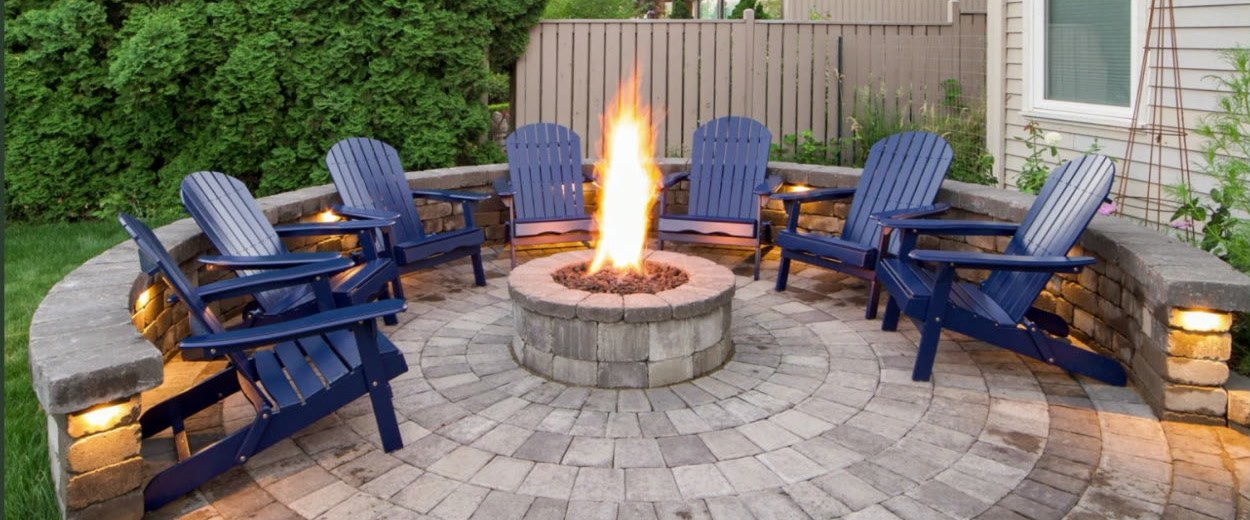
Fire pits and seating walls. A built-in fire pit with a paver surround and a low seating wall gives a patio a focal point and extra seating without more furniture. Florida evenings from October to April are made for it.
Retaining walls. On a sloped lot, a block retaining wall controls grading and erosion and can create raised beds or level terraces.
Outdoor kitchens. If you cook outside, plan the kitchen with the patio, shade, drainage and lighting in one design. Here's how we approach outdoor kitchens.
You can see and touch every material in our outdoor paver showroom at 12032 Tarpon Springs Rd in Odessa: brick, travertine, interlocking concrete pavers, flagstone, porcelain, limestone and permeable pavers. More on our pavers and hardscape work, and our guide to paver patios in Tampa Bay.
Fencing, privacy and boundaries
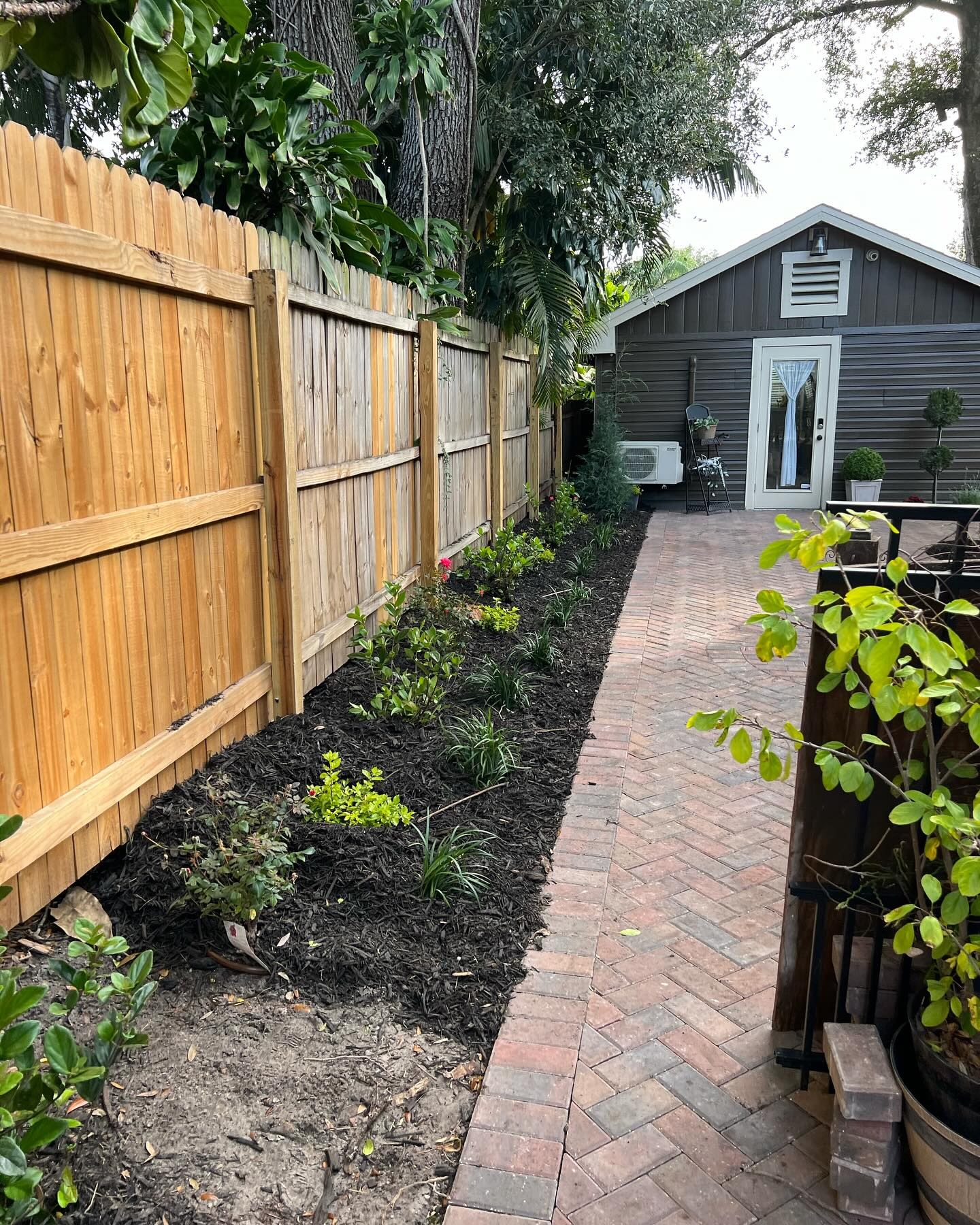
A fence is often the biggest single surface in a backyard, so a good design treats it as part of the view. A few ways we work fences into a plan:
- Soften the fence line. Layered plantings in front of a plain wood or vinyl fence turn it into a green backdrop.
- Leave a maintenance strip. Keep a little room between the back of a bed and the fence so you can reach the fence for repairs and stain, and so shrubs aren't pressed against it.
- Line gates up with paths. A gate should open onto a path, and a path should lead to the gate.
- Use living screens where a fence can't go. A hedge or a staggered row of shrubs and small trees can block a view, hide pool equipment or soften a neighbor's second-story window. Viburnum, podocarpus and clusia are common choices in our area, and we'll match the plant to the sun and the height you need.
- Check the rules first. Many HOAs and cities set fence heights, materials and setbacks, so we design inside those limits from the start.
If you already have a fence, we design around it. If a new fence is part of your project, we'll plan the beds, paths and sprinkler lines around where it will go so nothing has to be redone.
Irrigation and sprinklers
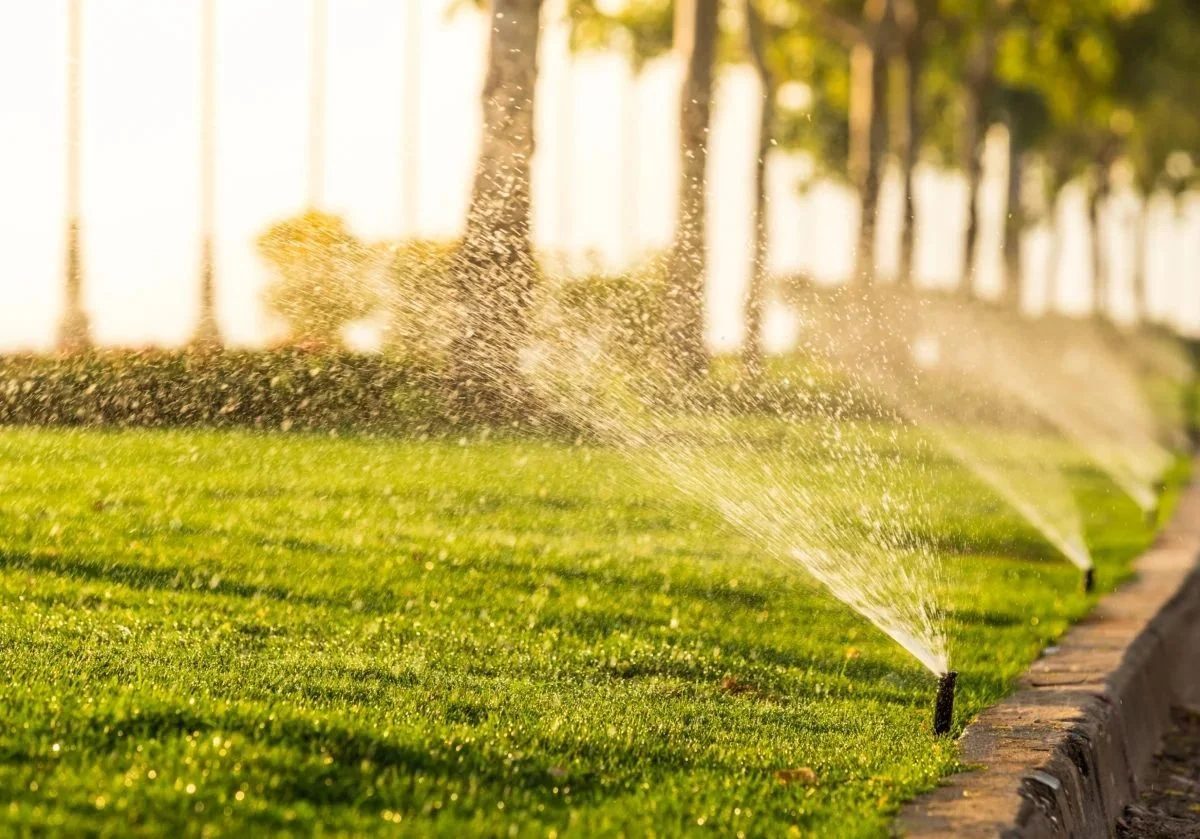
Irrigation is easiest and least expensive to get right when it's designed with the planting plan. Here's what that looks like:
- Zones by plant type. Lawn and beds need very different amounts of water. Turf usually gets spray or rotor heads on its own zones, and beds do best on drip or micro irrigation that puts water at the roots and keeps it off walls, windows and pavers.
- Following the watering rules. Most residential properties in the Tampa Bay area may water twice a week on assigned days, and not between 10 a.m. and 4 p.m. A smart controller that adjusts for rainfall helps you stay within the rules and avoid overwatering.
- Planning for drainage. Summer storms drop a lot of water fast. French drains, swales and catch basins move it away from the house and keep it from standing in the lawn. Our post on standing water in a Tampa Bay yard walks through the common causes.
- Permits. A new irrigation system connected to public water typically needs a permit and an inspected backflow preventer. We handle that on new installations.
More on our irrigation and drainage services.
Landscape lighting
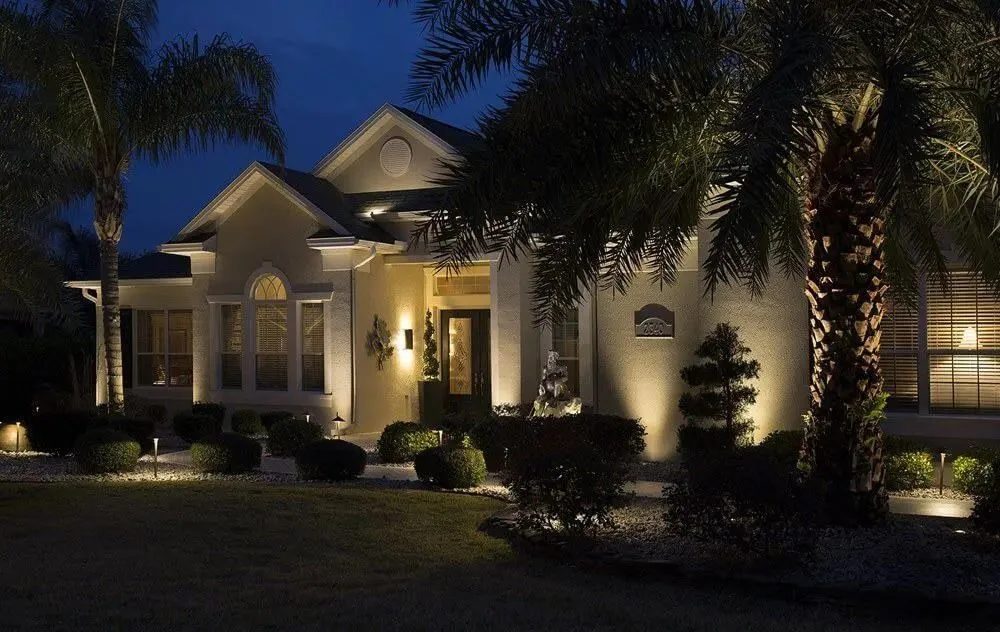
Lighting turns a yard you see on weekends into one you enjoy every evening, and it works best when it's part of the original design. The biggest reason is wire. If lighting is planned before pavers go down, we can run conduit under the walk or patio. Adding it later means working around finished hardscape.
In a design, we decide:
- What deserves the light. Usually a few strong features: an oak or a group of palms, the front entry, a fountain, the tiki hut, the path and any steps.
- Low voltage or line voltage. Low-voltage lighting runs on 12 volts through a transformer and covers most residential needs. Line voltage (120 volts) is used for pole lights, security lighting and higher-output fixtures. Many yards use both.
- Fixtures that hold up here. Florida heat, humidity and rain are hard on lights, which is why we install commercial-grade fixtures that carry manufacturer warranties.
- Control. Timers or smart controls, adjusted as daylight changes through the year.
See our outdoor lighting design work and our post on landscape lighting in Tampa Bay.
Tiki huts: the backyard gathering spot
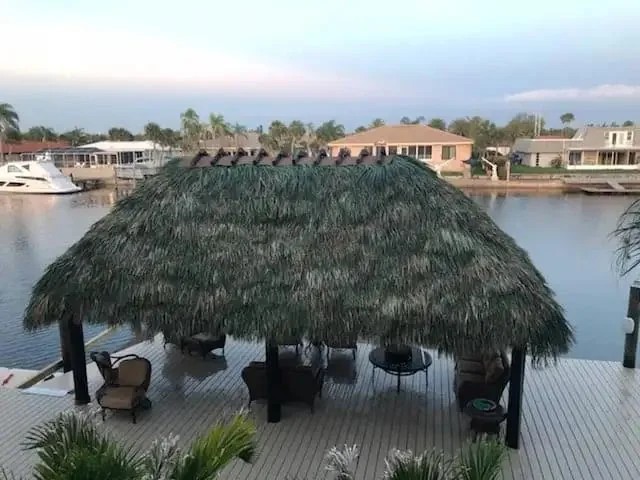
A tiki hut gives you real shade without electricity. It's 10 to 15 degrees cooler under a palm-thatched roof than in direct sun. We build them by hand on site from pressure-treated wood or natural cypress, with a roof of layered Florida sable palm fronds, for homes, pool decks, docks and businesses, including our work at Raymond James Stadium in Tampa.
What makes a tiki hut look like it belongs is the design around it:
- Placement. Put it where you'll sit during the hottest part of the day, often beside the pool or at the end of a patio, and think about which way the afternoon sun comes in.
- A path to it. Stepping stones or a paver walk connect the hut to the house and the pool so it feels like part of the yard.
- Plants around the posts. Palms, crotons, bromeliads and large potted plants at the corners make a hut look settled in. Our pottery and fountain yard in Odessa is a good place to choose pots that suit it; see our pottery and fountains.
- Lighting. Soft light under the eaves and a couple of uplights on nearby palms make the hut a nighttime spot too.
- Upkeep. Thatch typically needs re-thatching every three to five years depending on sun and weather, and cypress frames last longer than untreated wood.
- Permits. Requirements vary by city and county and by the size of the structure. We advise on permitting for every tiki hut we build.
Learn more about our tiki huts.
How the pieces go in
Order matters when a design comes to life. On most full projects, the work runs in this sequence:
- Underground first: drainage, irrigation lines and lighting conduit.
- Hardscape next: paths, patios, walls, fire pits and tiki huts.
- Plants and sod: trees and palms first, then shrubs, groundcovers and sod.
- Finishing: mulch, edging, light fixtures placed and aimed, and the controller programmed.
Because we self-perform the landscape, hardscape and planting work, one team sequences the whole job from start to finish. And if you're installing in phases, the design tells us where to leave sleeves and stub-outs now so phase two doesn't tear up phase one.
What to bring to your design consultation
- Photos of yards you like, even if they're not in Florida.
- Your HOA's architectural guidelines, if you have them.
- A list of how you want to use the yard: entertaining, kids, pets, a garden, a quiet place to sit.
- What you don't like about the yard now.
- A survey or plat of your lot, if you have one handy.
Our customers tend to remember the follow-through as much as the design. As Josh put it after we installed new patios and plantings at their home: "Their follow-up customer service is the best. They made a trip to our house to ensure our plants were healthy and answered all our questions about follow-on maintenance, including pruning and feeding."
Frequently asked questions
What does landscaping design include?
A full landscaping design covers plants, hardscape (paths, patios, fire pits, walls), irrigation and drainage, lighting, privacy and boundaries, and shade structures like tiki huts. You can install all of it at once or in phases.
Is the design consultation free?
Yes. Your designer walks the property with you, talks through ideas and options, and puts together a plan and an estimate. There's no obligation.
Do I have to do the whole yard at once?
No. Many homeowners start with the front beds or a patio and add lighting, a fire pit or a tiki hut later. A good design plans for those later phases so nothing has to be torn out.
Can you work with my existing landscape?
Yes. We often keep healthy trees, palms and hardscape and design around them, adding lighting, new beds or a path that ties everything together.
When is the best time to start a landscaping design in Tampa Bay?
Fall and winter are a great time. The heat has broken, and plants that go in now have the cooler months to root in before summer. They'll still need regular watering for the first few weeks.
Do tiki huts and irrigation systems need permits?
It depends on where you live. Tiki hut rules vary by city, county and the size of the structure, and new irrigation connected to public water usually needs a permit and a backflow inspection. We advise on both as part of the project.
Where do you work?
We're based in Odessa and design yards across Greater Tampa Bay, including Odessa, Tampa, Lutz, Land O' Lakes, Trinity, Westchase, Keystone and Citrus Park.
Start your landscaping design
Millennium Lawn, Landscape & Nursery is a certified woman-owned, family-operated design-build company that has been creating outdoor spaces in Tampa Bay for more than 25 years, with a 20-acre nursery, an outdoor paver showroom and an ISA Certified Arborist on staff. If you're ready to talk through ideas for your yard, schedule a free estimate or call us at (813) 920-8041. Learn more about our residential landscaping.