We grind below grade, clean up the chips, and backfill so the spot is ready for sod, a bed, or a paver run. Same crew that took the tree down, so nothing gets left half-finished.
Cutting a tree flush with the ground leaves the root crown in place. It sprouts, it attracts termites and carpenter ants, and it makes that patch of yard unusable for anything you actually want there.
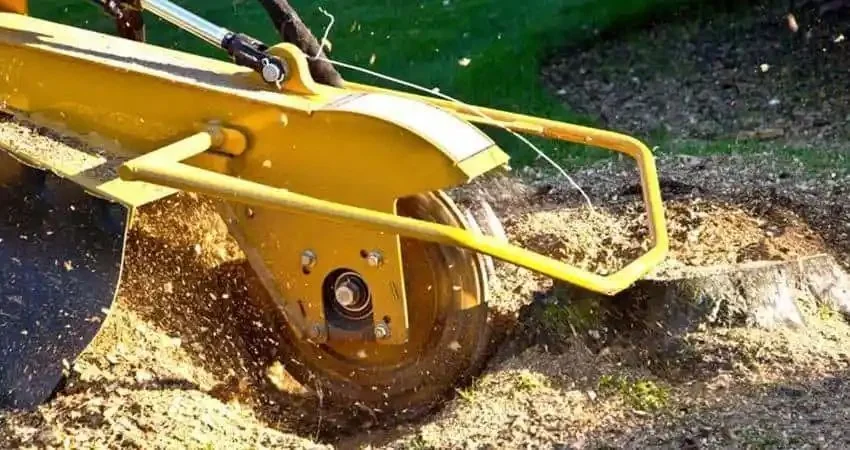
Stump grinding uses a carbide wheel to chew the stump and the flare roots down below grade. What is left is a hole full of chips instead of a stump, which we then backfill so you can put the space back to work.
A stump is not a cosmetic problem. In Florida it is a food source. Decaying hardwood in a warm, wet climate draws subterranean termites and carpenter ants toward the structure they are sitting next to.
It is also a mowing hazard, a trip hazard, and the reason a sprinkler head or paver run has to detour around a patch of your own yard. Grinding removes the reason for all of it.
We locate irrigation and utilities before the wheel touches anything. Most residential stumps are done in a single visit, and we grind to the depth the next use of that space actually needs, which is deeper for sod and paver work than for a planting bed.
If we took the tree down, the grind is scheduled with the removal so there is one mobilization and one cleanup instead of two.
For a planting bed we typically grind 8 to 12 inches below grade. For sod, irrigation, or anything hardscape we go deeper, because the remaining wood will settle as it decays and you will see it in the finished surface. We set the depth based on what is going in over the top.
Your choice. A grind produces a surprising volume of chips, more than most people expect. We can haul them off, or backfill the hole with them and top with soil, which is fine for a bed but not for sod or pavers.
Grass, yes, once we backfill with soil rather than chips. A new tree in the exact same spot is harder, because the remaining root mass and the nitrogen draw from decaying wood work against a young root ball. We usually suggest shifting the new tree a few feet.
We take down the surface flare roots that radiate from the stump, which is what most people are actually tripping over and mowing into. Full root-system excavation is a different, much more invasive job and is rarely necessary.
It depends on diameter, species, how close it sits to structures or irrigation, and access for the machine. We give a firm number on site, and if we are already removing the tree the grind is priced together with it.
Tell us where it is and what you want to do with the space afterward. We will walk it with you and give you a firm price, free.

