

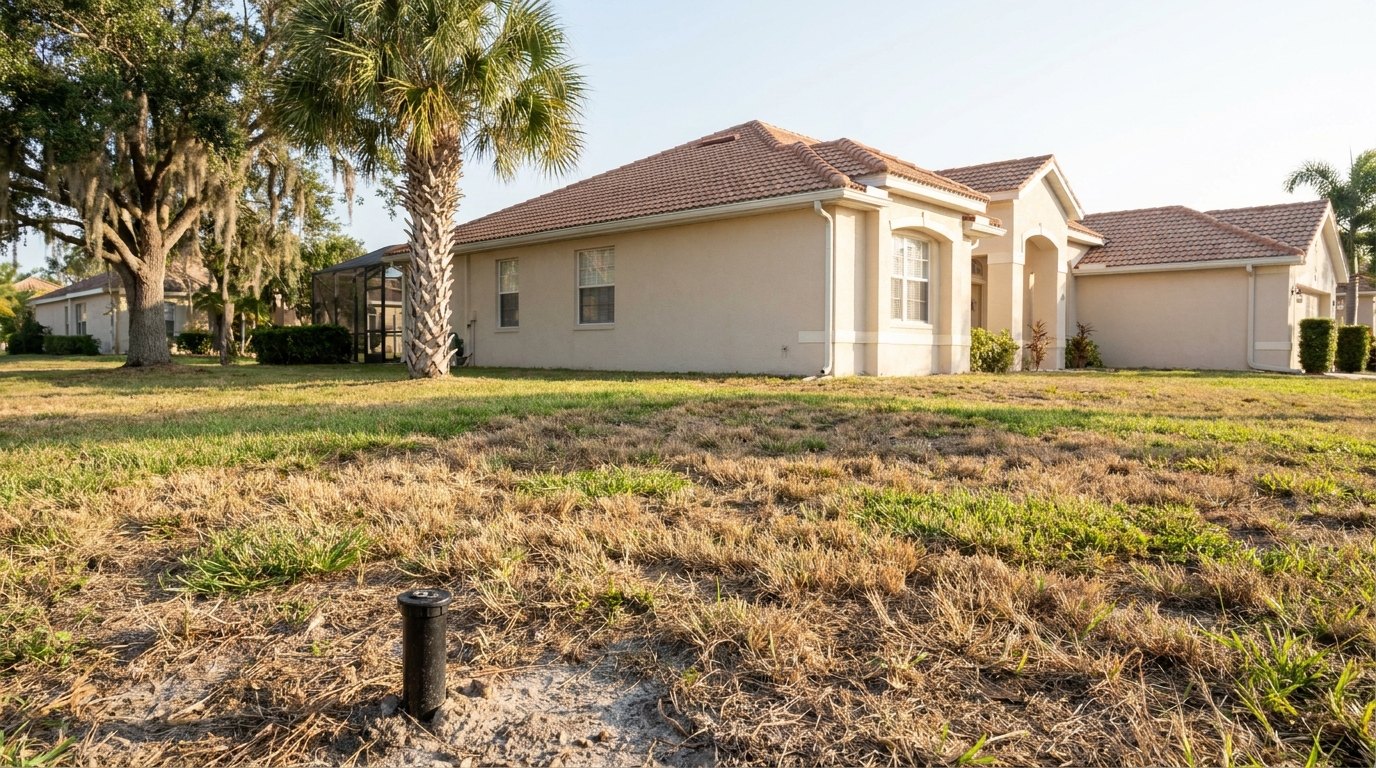
Half the calls we took this week started the same way: "My lawn is brown, and I'm already watering." Tampa Bay is in a long, stubborn drought. Watering restrictions are the tightest most homeowners have ever lived with, and a lot of people are worried about their water bill and their grass at the same time.
We've done lawn care in Odessa, FL and across Pasco, Hillsborough and Pinellas for over 25 years. A brown lawn in a drought usually has a cause you can find. Guessing at it costs you water, money and sometimes the grass itself.
This guide walks through what the current watering rules mean for your yard, how to tell drought stress from bugs and irrigation problems, and what to do about each one.
What the water shortage order means for your lawn right now
The Southwest Florida Water Management District has Pasco, Hillsborough, Pinellas and the rest of the region under a Modified Phase III "Extreme" Water Shortage, now extended through March 31, 2027. Here's what that means at home:
- One watering day per week. Your day is assigned by your address, and it applies to private wells too.
- Two watering windows: 12:01 a.m. to 4 a.m., or 8 p.m. to 11:59 p.m. Properties under an acre may use only one of those windows on their day.
- Your city or county may be stricter. Check your local utility's page for your exact day before you reset the clock.
Florida law also requires a working rain sensor or shutoff device on every automatic sprinkler system, so the system skips a cycle after real rain. With only one day a week, a rain sensor that's stuck "wet" can cost you your only watering, so test it.
Brown grass can come from a few different problems
Drought stress, a bad irrigation zone, chinch bugs and fertilizer burn can all leave a brown patch. From the street they look almost the same.
The fix for each one is different. More water won't cure a bug problem. A bug treatment won't help a zone that stopped running in August. That's why the first job is figuring out which problem you actually have.
The pattern of the damage is your first clue:
- The whole yard is dull and slowly browning: usually drought stress.
- Brown arcs, stripes or one dry corner of a zone: usually irrigation coverage.
- Yellow-brown patches that spread outward, often in hot, sunny spots next to the driveway, sidewalk or street: check for chinch bugs.
- Brown stripes or streaks a few days after fertilizing: often fertilizer burn from an overlapping spreader pass.
Three quick checks for drought stress
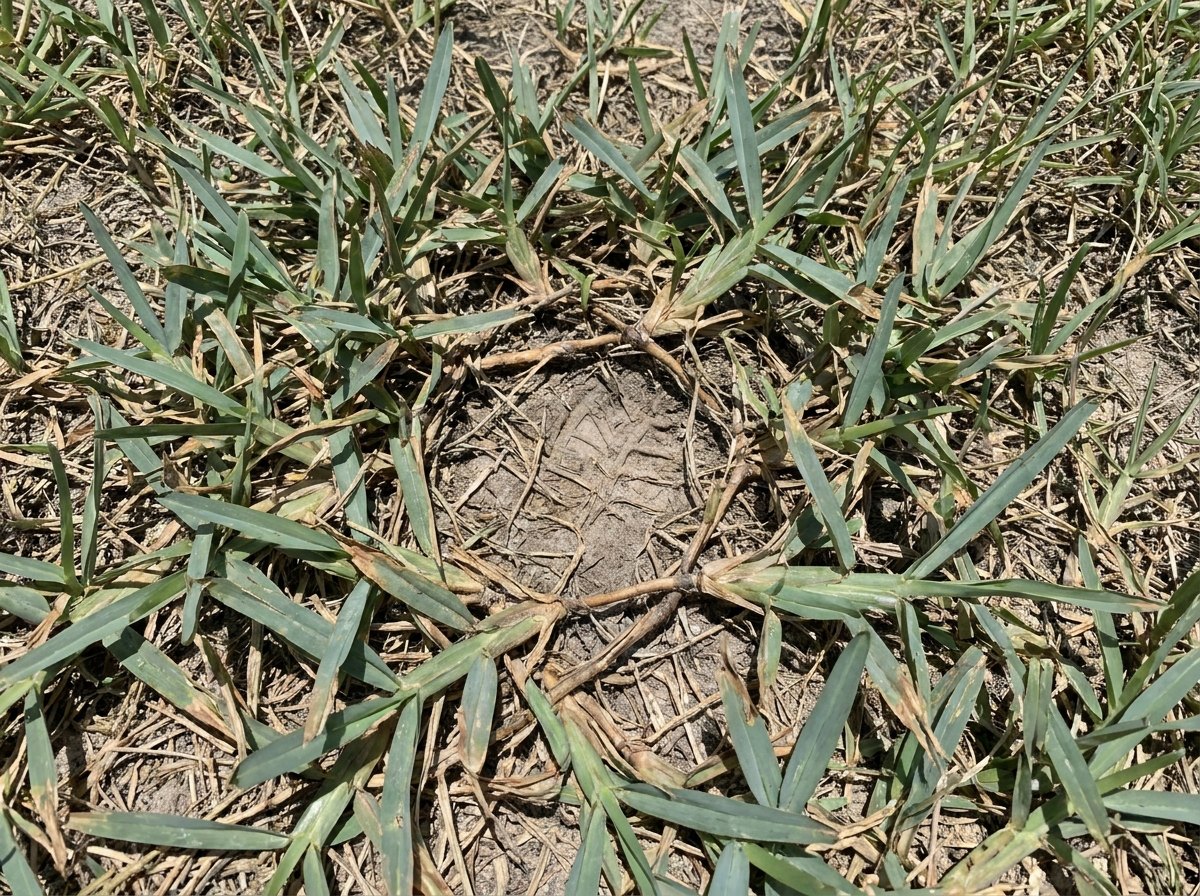
The footprint test. Walk across the lawn and look back. If your footprints stay pressed into the grass a minute later, the turf is short on water.
The leaf test. Drought-stressed St. Augustine folds its blades in half lengthwise and turns a dull bluish-gray green before it browns.
Know your grass. Bahiagrass is built for dry spells. It often goes dormant and brown in a drought and greens back up when water returns. St. Augustine, the most common lawn grass in our area, doesn't handle drought as well. It thins out and can die in patches, so it's the one to watch most closely.
Start with the irrigation clock
Most of the irrigation mishaps we see start at the controller. These are the usual suspects:
- The clock reset itself after a power flicker and is back on factory settings.
- A zone is still set to run on a day your county doesn't allow.
- The rain sensor is broken, unplugged or stuck, so cycles skip for no reason.
- Spray heads and rotors are mixed on the same zone, so one area floods while the other stays dry.
- A head is tilted, clogged or broken and is watering the driveway.
- Run times were never updated after the rainy season ended.
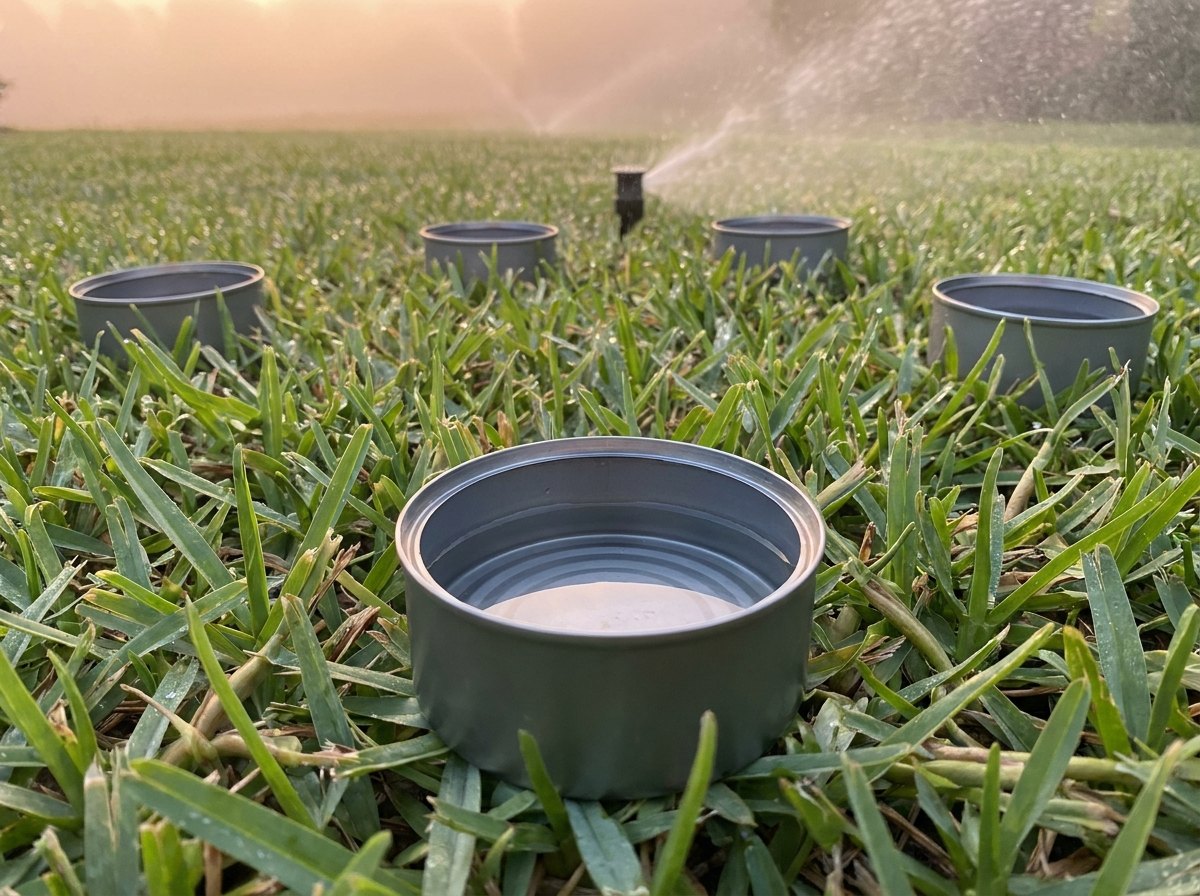
Here's a simple test. Set a few straight-sided cups or empty, open tuna cans around one zone and run it. When it's done, measure the water in each one. If one can has twice as much as another, your coverage is uneven, and that's often exactly where the brown patch sits. The cans also tell you how much water a cycle actually puts down, which matters a lot when you only get one day.
If the clock or the heads are the problem, our irrigation and drainage team can audit the whole system zone by zone.
Make your one watering day count
With one day a week, each cycle has to do the work of two or three. A few things help:
- Water in the early-morning window. The 12:01 a.m. to 4 a.m. window is the better choice when you can use it. Grass that gets watered in the evening stays wet all night, which invites fungus.
- Water deeply. University of Florida turf guidance calls for about a half inch to three-quarters of an inch of water per watering. One deep soak trains roots to grow down. Light sprinkling keeps them shallow, and shallow roots brown out first when a dry week hits.
- Match run times to your cans. If your catch-can test shows a zone puts down a quarter inch in 15 minutes, it needs roughly 30 to 45 minutes to reach that half to three-quarter inch.
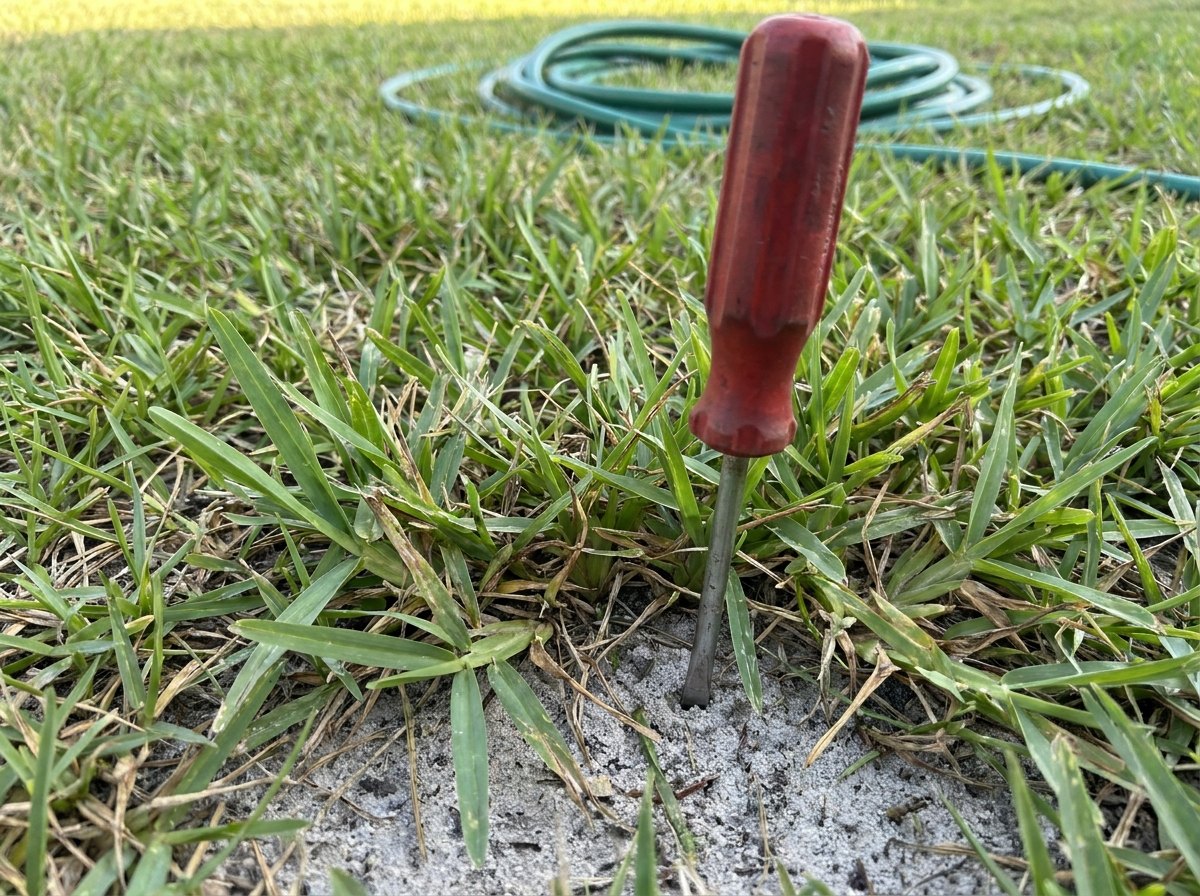
A screwdriver makes a good moisture gauge. Push it into the soil the day after watering. If it slides in six inches or so, the water is reaching the roots. If it stops short, you need longer run times or better coverage.
Mow higher during a drought
Taller grass shades its own roots and loses less water. During a drought, raise the mower deck to the top of the recommended range for your grass. For most standard St. Augustine lawns that's about 3.5 to 4 inches. Keep the blade sharp, since a dull blade shreds the tips and the lawn loses more moisture through the torn ends. Leave the clippings on the lawn, and skip mowing grass that's already wilted in the heat of the day.
Fertilizer and bugs run on the same calendar
This is where we see the most trouble. Irrigation, fertilizing and pest control all follow a schedule, and each one affects the others.
Fertilizing a thirsty lawn pushes growth the roots can't support, and it can burn the blades. Wait until the grass is watered and actively growing. Our post on the fall fertilizer window covers the timing.
Chinch bugs love hot, dry St. Augustine, so a drought invites them in. Treat for bugs that aren't there and you've spent money on the wrong fix.
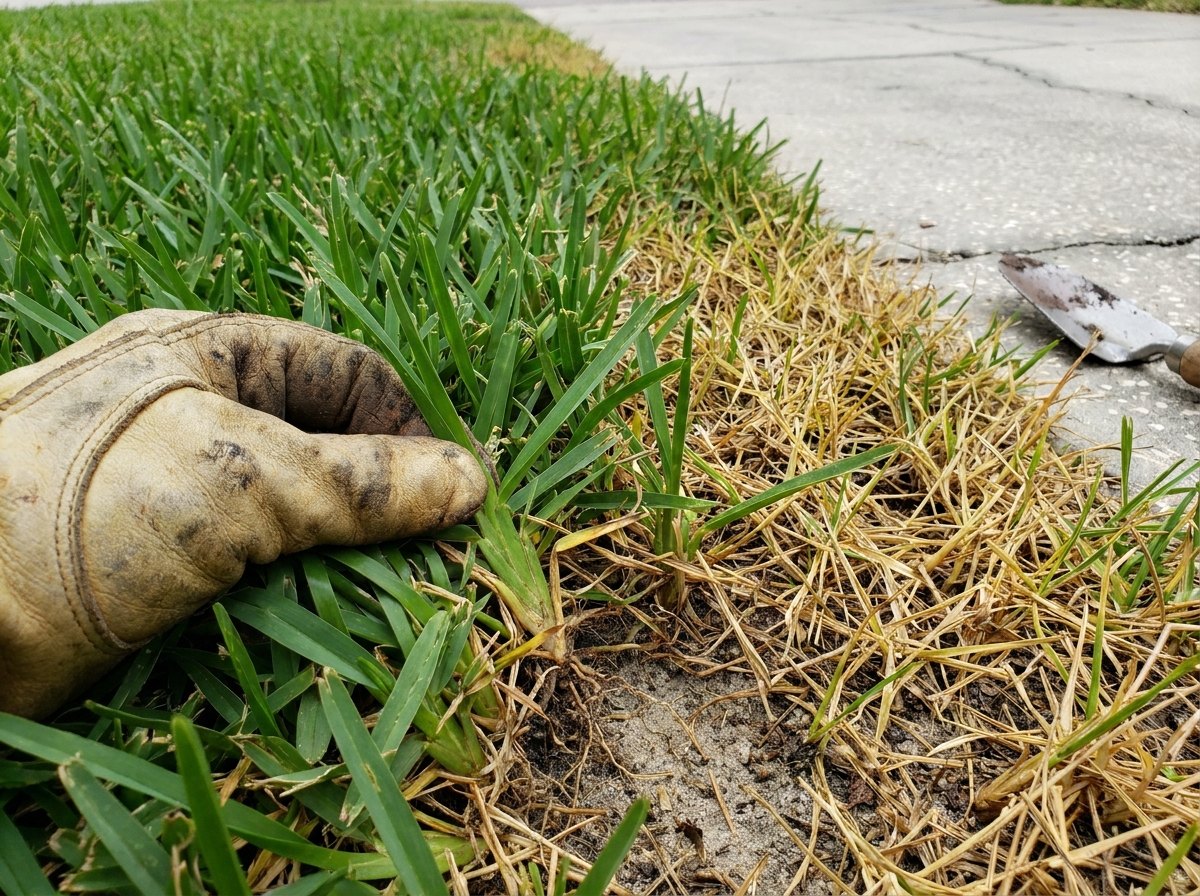
To check for chinch bugs, look where brown grass meets green. Part the blades at the soil line and watch for tiny insects. Adults are about a fifth of an inch long and black, with white wings folded over their backs. The young ones are smaller and reddish orange with a white band.
For a second check, try the float test. Cut both ends off a large can, push it a couple of inches into the soil at the edge of the brown patch, and fill it with water. Keep it topped off for about ten minutes. Chinch bugs that are there will float to the surface.
If you find them, that's a treatment call for our fertilization and pest control team. If you don't, look back at the water.
A crew that mows and leaves can't always see this whole picture. Finding the root cause means looking at the clock, the coverage, the soil and the bugs together, on a calendar that matches Florida's seasons.
A yard that looks good on less water
Some callers this week were done fighting the lawn altogether. That's a reasonable choice, and one-day-a-week watering through March is a good reason to make it.
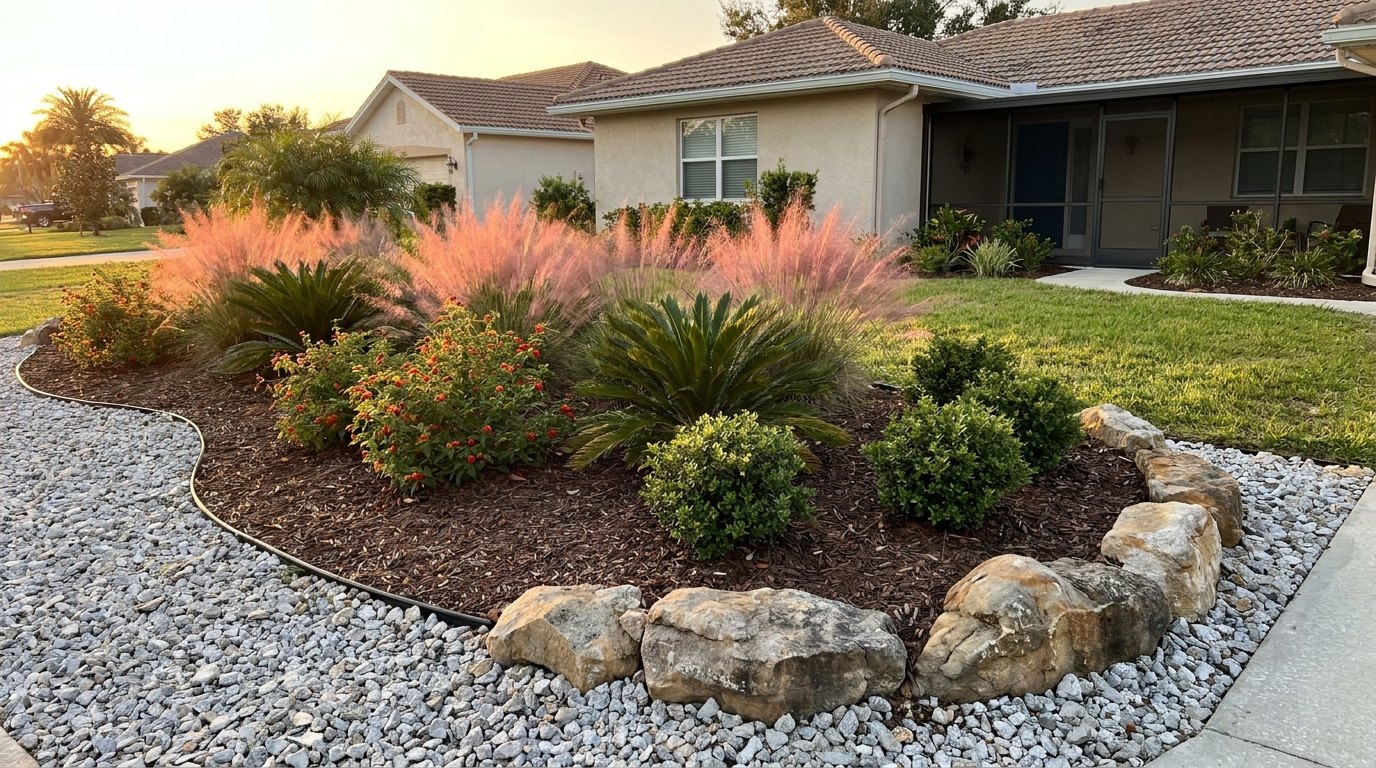
Shrinking the turf area cuts water use right away. Wider planting beds with fresh mulch hold moisture in the soil. A crushed concrete border gives a natural rocky look that needs no water at all. Florida-friendly shrubs and groundcovers from our nursery, like coontie, muhly grass, firebush and dwarf yaupon holly, can handle a dry spell once they're established.
For ideas, see our low-maintenance landscaping ideas for Florida and our whole-yard landscaping design guide.
If part of the lawn is too far gone, new sod can wait until the weather and the restrictions let it root in properly. New sod and new plants need extra water to establish, so check your county's current rules for new plantings before you install. In the meantime, beds and borders can carry the yard.
Frequently asked questions
How often can I water my lawn during the drought?
Under the current water shortage order, once a week on your assigned day, between 12:01 a.m. and 4 a.m. or between 8 p.m. and 11:59 p.m. Properties under an acre may use only one of those windows. Your city or county may be stricter, so check your local rules.
Is my brown lawn dead?
Not always. Bahiagrass often goes dormant in a drought and recovers when water returns. St. Augustine is less forgiving. Tug a few brown runners: if they're brittle and pull up easily with no green at the base, that section is likely dead.
Should I fertilize a brown lawn?
No. Fertilizing drought-stressed grass pushes growth the roots can't support and can burn the blades. Fix the water problem first, then feed when the lawn is actively growing.
How do I know if I have chinch bugs?
Look where brown grass meets green, part the blades at the soil line and look for tiny black insects with white wings, or try the float test with an open-ended can and water.
Do I need a rain sensor on my sprinkler system?
Yes. Florida law requires a working rain sensor or shutoff device on automatic sprinkler systems. During one-day-a-week watering, a stuck sensor can cost you your only watering, so test it.
Can I put down new sod during the water shortage?
New sod needs frequent watering to root in. Check your county's current rules for new plantings before you schedule it. Often it makes sense to fix the irrigation and plant beds now and lay sod once restrictions ease.
Get the cause found before the holidays
A brown lawn is a symptom. Find what's behind it and you can stop wasting water on the wrong fix.
If you'd like our team to walk your yard, check the irrigation and tell you what's going on, schedule an estimate or call the office at (813) 920-8041.