

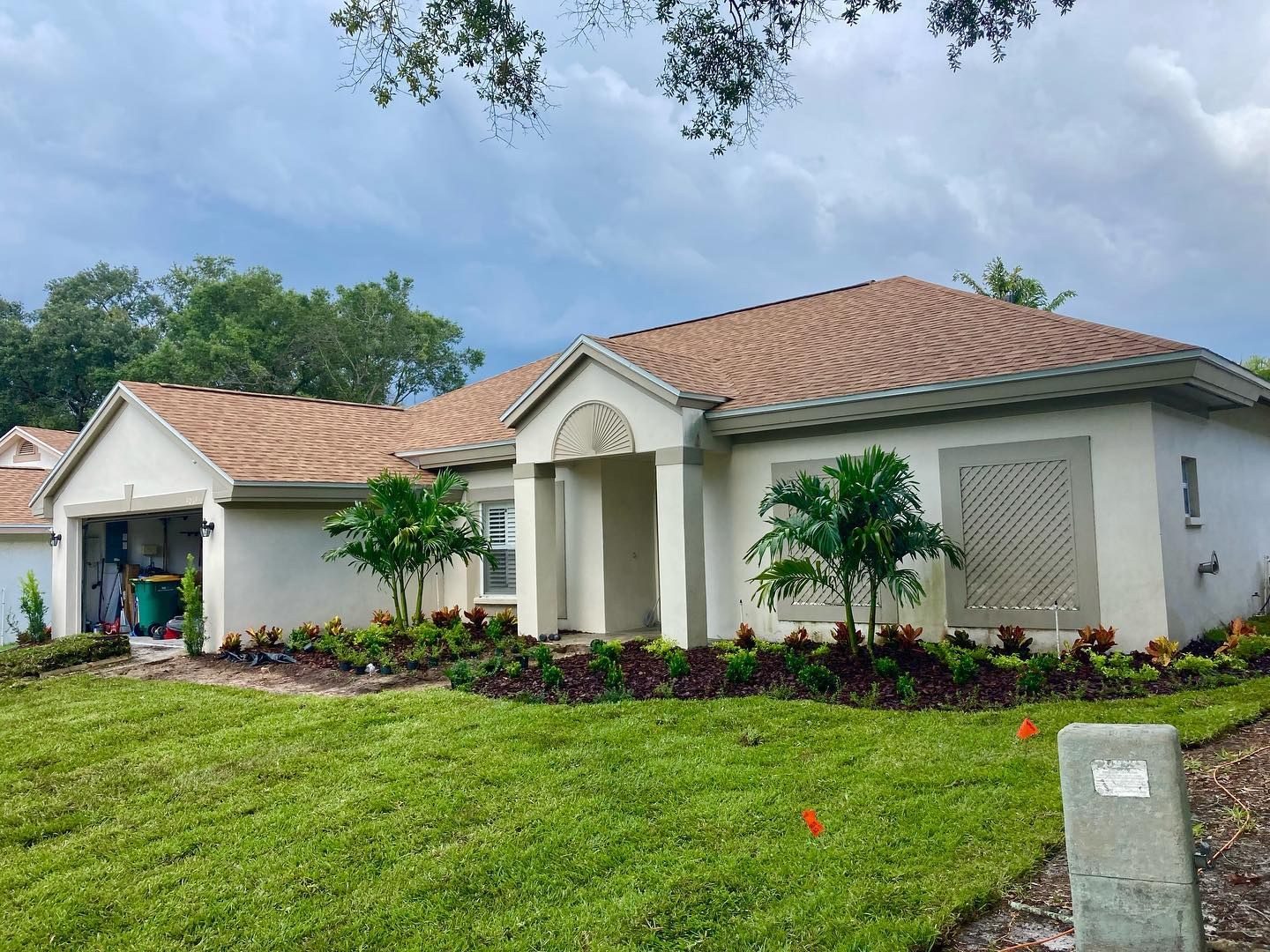
If you live in Wesley Chapel or Land O' Lakes, there's a good chance your front yard was put in by the builder. Neighborhoods like Seven Oaks, Wiregrass Ranch, Epperson, Meadow Pointe, Connerton and Bexley went up fast, and most of the yards in them started the same way: St. Augustine or Bahia sod across nearly the whole lot, one row of shrubs against the house, a tree or two, and a thin layer of mulch.
That's a fine starting point. It's designed to make the house look finished on closing day, not to look good for the next twenty years. A few years in, the same problems tend to show up on street after street.
Here's what we look for when a homeowner asks us to fix a builder-grade yard, and the changes that usually make the biggest difference. From our nursery in Odessa, Land O' Lakes and Wesley Chapel are a straight run east on State Road 54, and they're part of the Pasco County area our crews cover every week.
What the builder usually leaves behind
- Shrubs planted for day one. Foundation shrubs go in small and close together so the house looks complete at closing. A few years later they're crowding the windows and getting sheared into boxes several times a year.
- Sod nearly everywhere. Turf covers the narrow side yards and the shady spots under young trees too, places where grass will never be happy.
- Shallow, skinny beds. A two or three foot strip along the foundation doesn't leave room for layers of plants, so the house looks flat from the street.
- One irrigation plan for everything. Beds and lawn often run on spray heads, sometimes on the same schedule, even though shrubs and turf want very different amounts of water.
- Compacted fill soil. New lots are commonly built up with fill and packed down by heavy equipment. Roots struggle to get through it, and water can sit on top after a summer storm.
Start with soil, water and drainage
New plants won't fix a yard that drains badly, so we start there.
Side yards between homes in newer communities are usually graded as shallow swales that carry storm water toward the street or a retention pond. Don't block them with raised beds, borders or edging, which can push water back toward the house. If water stands for more than a day after a heavy rain, that's worth fixing before anything else goes in. Our post on standing water in a Tampa Bay yard walks through the common causes.
In new or enlarged beds, loosen the compacted soil and work in organic matter so roots can spread. Then look at the irrigation. Converting bed zones from spray heads to drip or micro irrigation puts water at the roots, keeps it off walls and windows, and lets the lawn and beds run on their own schedules. Our irrigation and drainage team handles both.
Check your HOA's guidelines first, and know your rights
Most communities in Wesley Chapel and Land O' Lakes have an architectural review committee that approves landscape changes visible from the street. Ask for the current guidelines before you design anything. They can cover approved plants, tree requirements, edging materials and even mulch colors, and starting inside the rules saves a resubmission.
If you're hoping for a lower-maintenance yard, Florida law helps. Section 373.185 of the Florida Statutes says deed restrictions and HOA covenants can't prohibit a homeowner from using Florida-friendly landscaping on their property. You'll still want to submit your plans for review, but a yard built around drought-tolerant, right-sized plants is something your association can't simply rule out.
The upgrades that change the most
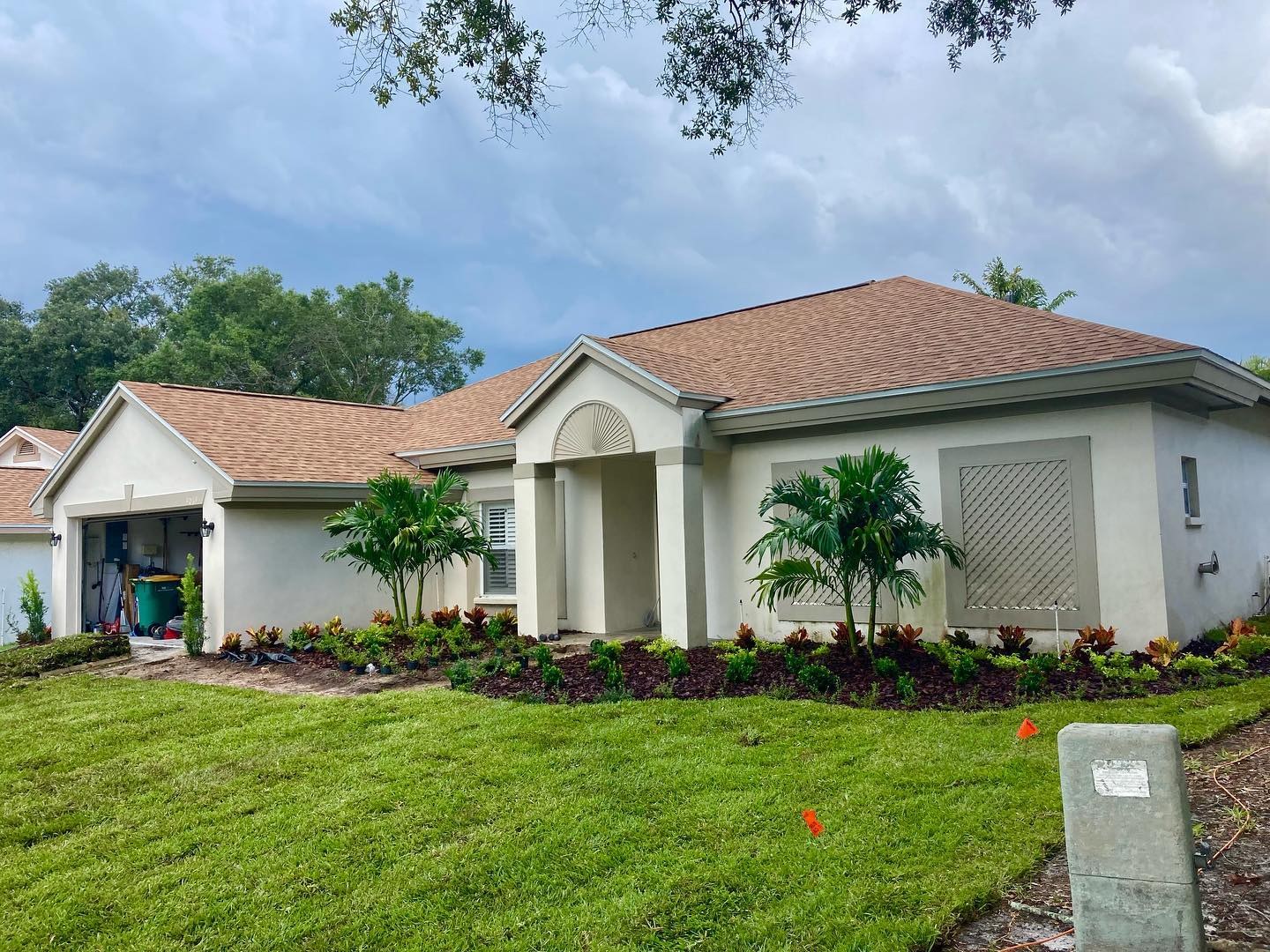
Deeper, curved beds
Pulling the bed line out from the house and giving it a gentle curve is the single biggest visual change in most builder yards. A deeper bed has room for layers: low groundcover at the front, mid-height shrubs behind it, and taller plants at the corners of the house to soften the walls. It also means less lawn to mow and edge.
Plants sized for where they'll end up
The fix for shrubs that swallow the windows isn't more trimming. It's choosing plants whose natural mature size fits the spot. Under a window, that might be dwarf yaupon holly, coontie or a dwarf form of Walter's viburnum, all of which stay low without constant shearing.
A focal tree in the right place
Builder trees are often planted close to the house or the sidewalk. If you're adding one, think about its size in fifteen years, not this year. A Little Gem magnolia, for example, stays far smaller than a full-size southern magnolia and fits a front yard much better.
Less lawn where grass struggles
Narrow side yards and deep shade are where St. Augustine thins out first. Replacing those patches with mulched beds or a shade-tolerant groundcover ends the cycle of reseeding and patching. Where grass does belong, a fresh sod refresh after the soil and irrigation are sorted out gives you a lawn that actually holds up.
Hardscape that makes the yard usable
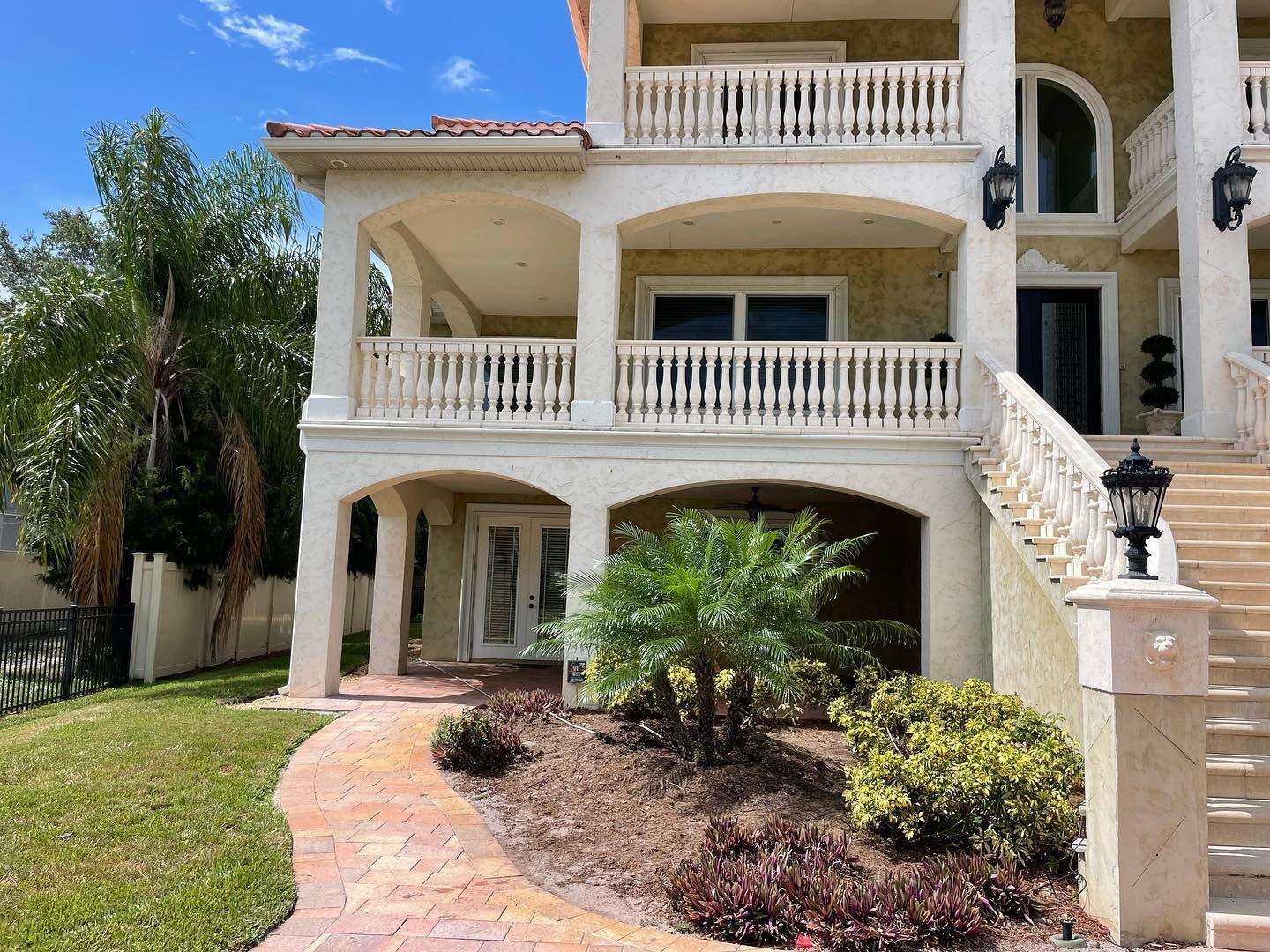
Builder walkways and patios tend to be narrow and small. Widening the front walk with pavers, or extending a back patio so a table and chairs actually fit, changes how you use the yard every day. See our pavers and hardscape work, and our guide to paver patios in Tampa Bay if you're weighing pavers against concrete.
A little light
Once the beds and trees are in, landscape lighting lets you see them after dark. A few uplights on a tree or palm and soft path lights along the walk make the house look welcoming and the steps easier to see.
Plants for inland Pasco yards
Wesley Chapel and Land O' Lakes sit inland, away from the moderating effect of the Gulf, and usually see colder winter nights than coastal neighborhoods. That matters when you choose plants.
Cold-tender tropicals like crotons, ixora and many bromeliads can be damaged in a hard freeze. Use them as accents in spots you can cover on the few cold nights we get, and build the backbone of the bed with tougher plants:
- Walter's viburnum. Native, dense and dependable. Dwarf forms work as low foundation shrubs.
- Dwarf yaupon holly. A tidy, rounded native that stays small.
- Simpson's stopper. A native shrub with small white flowers that works as a hedge or a small tree.
- Coontie. A low, fern-like native that handles sun or shade.
- Firebush. A hummingbird and butterfly favorite. It can die back in a freeze but usually returns from the roots in spring.
- Muhly grass. Fine-textured clumps with pink fall plumes, and very little care once it's established.
If you want to go further and cut out most of the upkeep, our post on low-maintenance landscaping ideas for Florida shows three complete looks for one tired front yard, with plant lists.
See the plants before they go in
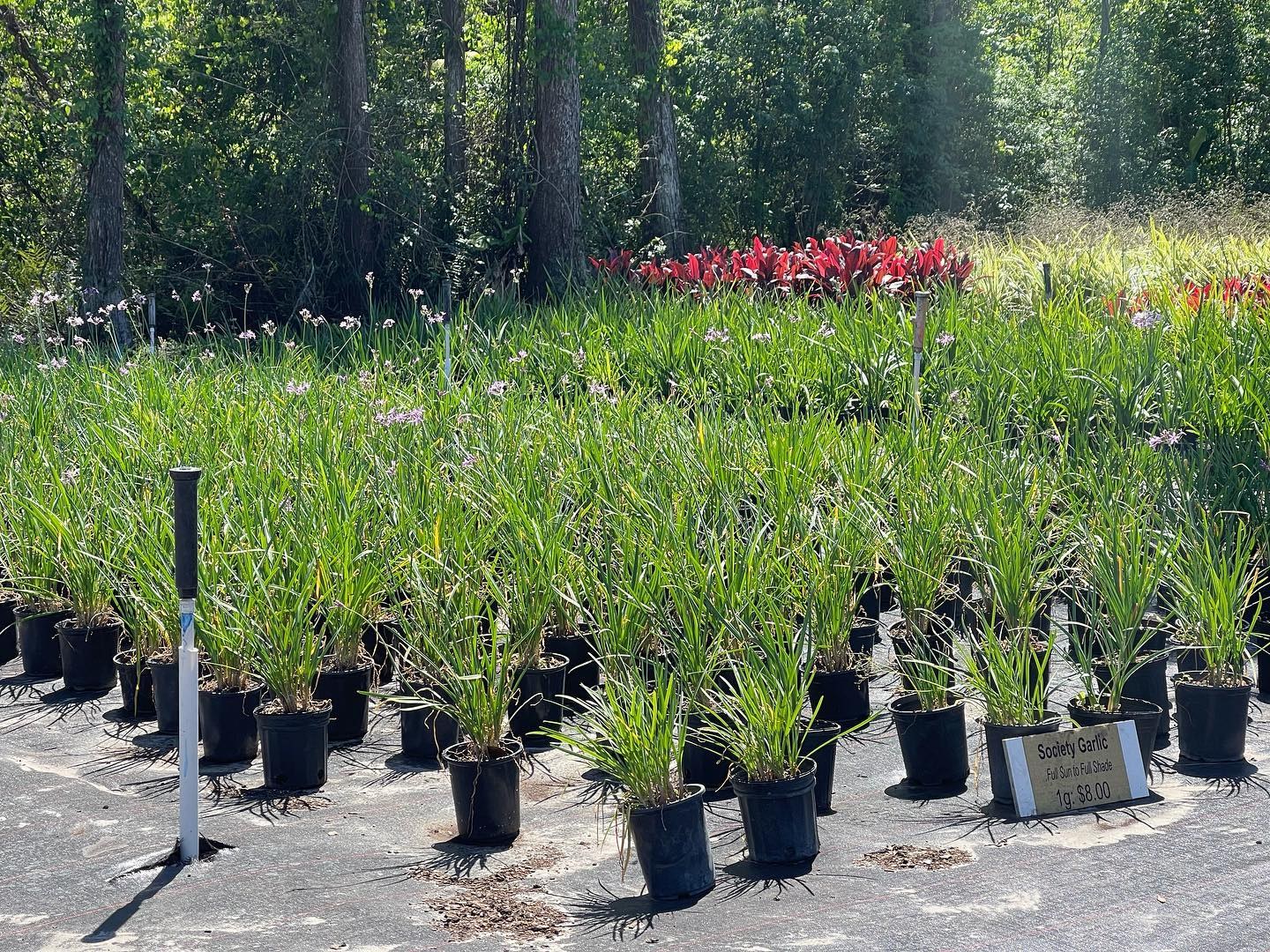
One advantage of working with us is our 20-acre nursery in Odessa, open to the public. You can walk the rows, see how big a plant really gets, and bring your HOA's approved plant list with you. Learn more about our nursery.
Common questions
Do you work in Wesley Chapel and Land O' Lakes?
Yes. Both are part of our Pasco County service area, along with Odessa, Trinity, Lutz and New Port Richey.
Is fall a good time to redo a builder yard?
Yes. The heat has broken, and plants that go in now have the cooler months to root in before next summer. They'll still need regular watering for the first few weeks.
Do I have to do everything at once?
No. A good plan can be installed in phases, starting with drainage and the front beds and adding hardscape or lighting later.
Get a free estimate
If your yard still looks the way the builder left it, we'd be glad to take a look. Schedule a free estimate or call us at (813) 920-8041.