

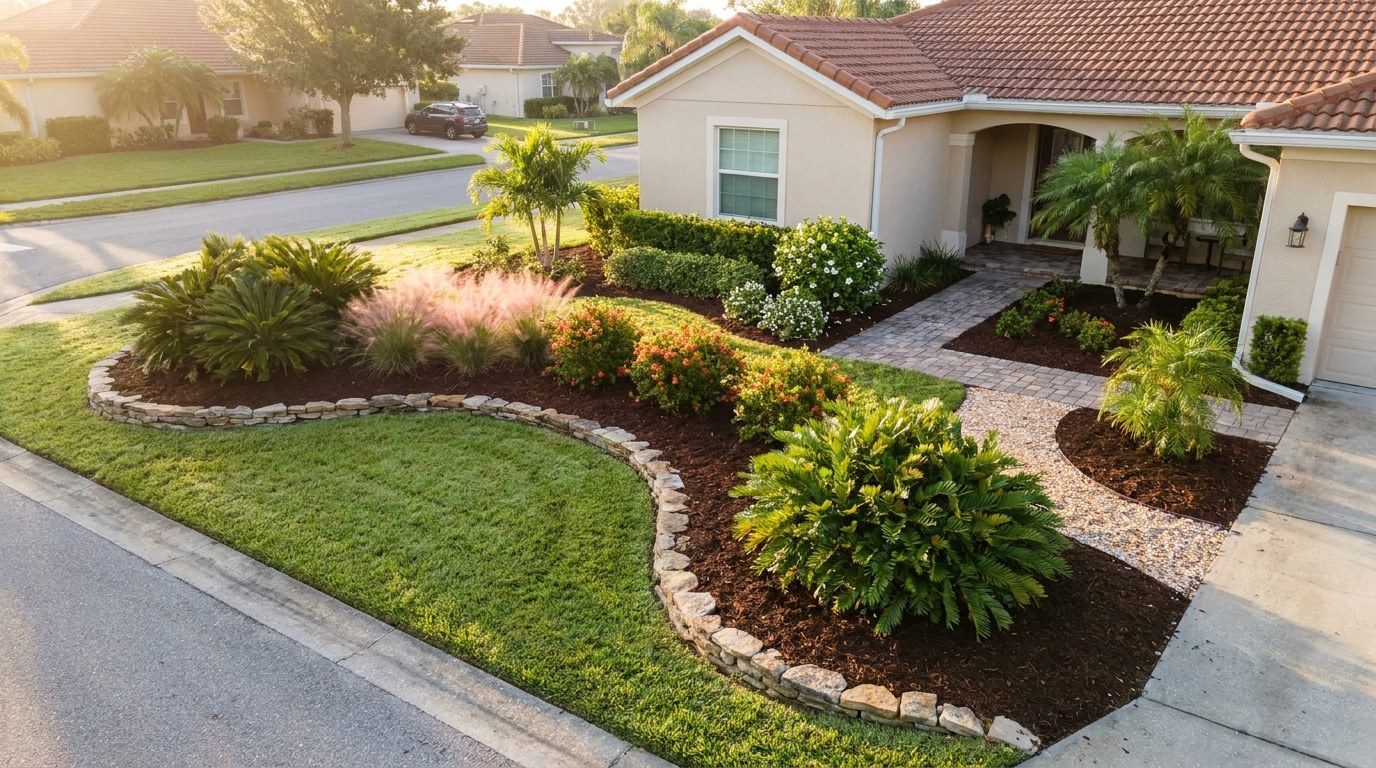
Tampa Bay's water is changing, and our yards can change with it. The region has been on one-day-a-week watering since spring, and the Southwest Florida Water Management District has extended those restrictions through March 31, 2027. A lot of homeowners are looking at a brown lawn and a high water bill and asking the same question: does the whole yard really need to be grass?
It doesn't. We call the answer a more Floridian yard. You keep the grass you actually use, trade the rest for planting beds, paths and Florida plants that like it here, and set up your irrigation to water each part of the yard the way it needs. The yard looks better, needs less from you, and holds up when the sprinklers only run once a week.
Keep the grass you use
Most lawns are bigger than they need to be. Think about where your family actually walks, plays and sits. That might be a patch out back where the kids and the dog run, or a strip out front that sets off the house. That grass is worth keeping and caring for.
The rest is often the grass that just gets mowed: the narrow side yards, the strip along the driveway, the shady spots under the oaks where St. Augustine thins out every year, and the corners the sprinklers never reach. Those are the best places to start a change.
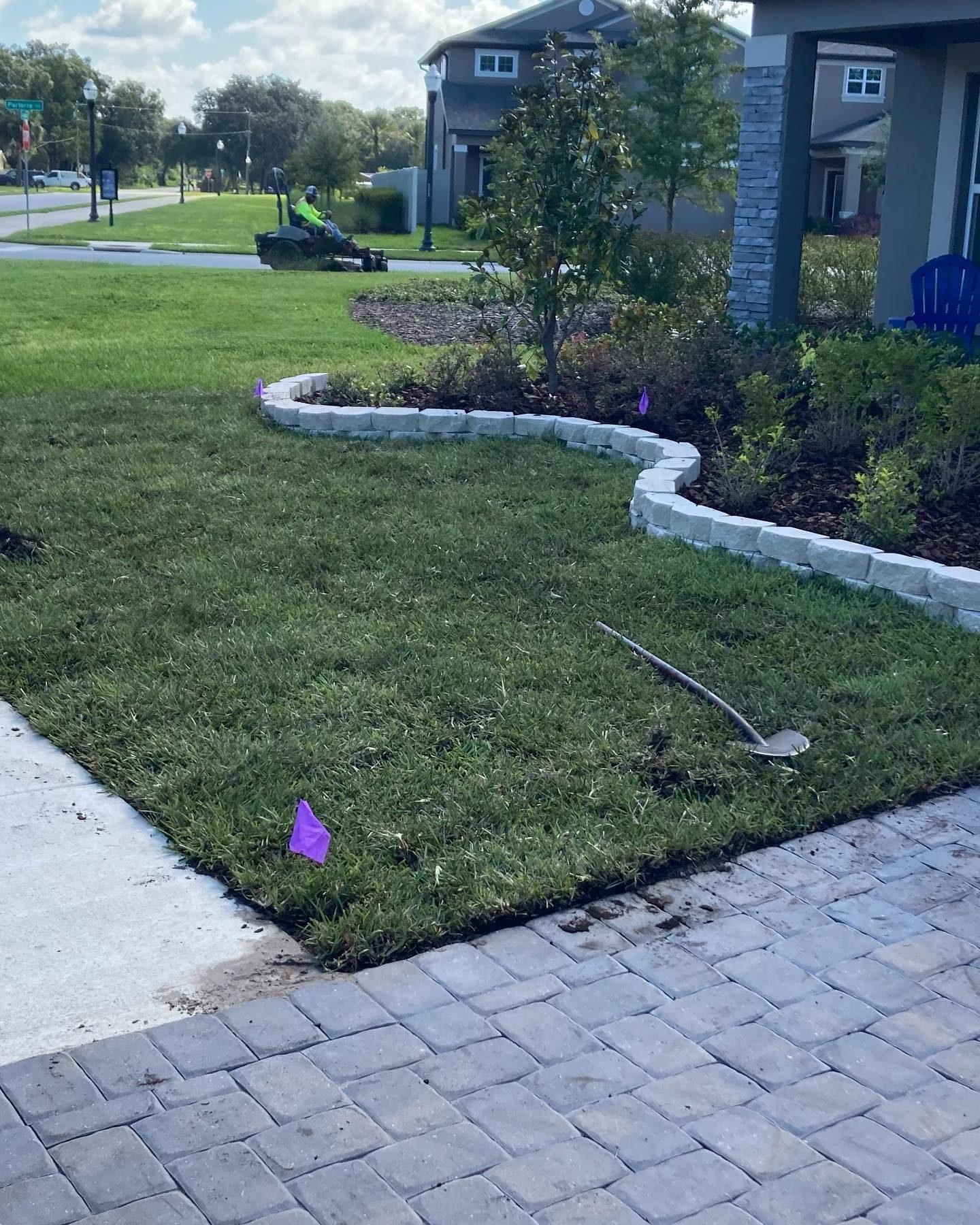
A smaller lawn is easier to keep green, especially on one watering day a week. You're putting the water, fertilizer and mowing into the part of the yard you enjoy.
What changes when the lawn gets smaller
When part of the lawn becomes planting beds, the irrigation has to change with it. This is the step most people skip, and it's why a lot of new beds struggle.
- Lawn and beds need different zones. Grass does well with spray heads or rotors. Shrubs and groundcovers do better with drip or micro irrigation that puts water right at the roots and keeps it off walls, walks and windows.
- Heads that no longer have a lawn to water get capped or moved. Otherwise they spray mulch, pavers and the side of the house.
- The schedule gets simpler and smarter. Once established, Florida-friendly beds need far less water than turf, so those zones run less often. A smart controller that adjusts for rain helps you stay inside your watering day and time.
- Your rain sensor matters more than ever. Florida law requires one on every automatic sprinkler system, and on a one-day-a-week schedule a stuck sensor can cost you your only watering.
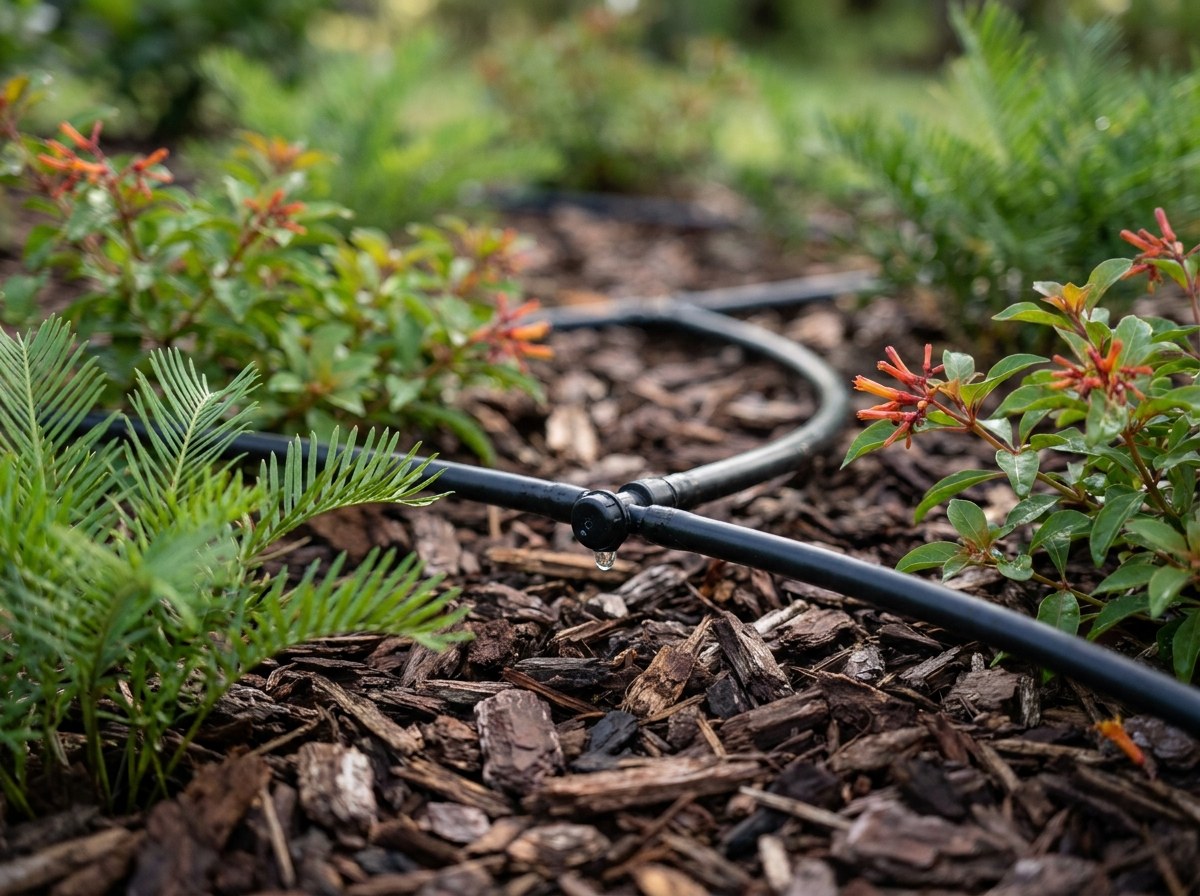
The order matters too. Irrigation changes go in before new beds and hardscape, so nothing gets dug up twice.
Mix beds, hardscape and Florida plants
A water-wise yard doesn't have to look sparse. The best ones are layered: shade, texture, color, a place to walk and a place to sit.
Planting beds with purpose. Wide, curved beds with groundcovers in front, mid-height shrubs behind and taller plants at the corners of the house. Choose plants for their mature size so they never need to be sheared back from the windows. Florida natives and Florida-friendly plants that do well around here include coontie, muhly grass, firebush, Walter's viburnum, dwarf yaupon holly, Simpson's stopper and American beautyberry.
Right plant, right place. That's the first principle of the University of Florida's Florida-Friendly Landscaping program, and it's the rule we design by. Sun lovers go in the sun, shade plants under the oaks, and plants that tolerate wet feet go where the water collects after a storm.
Mulch. A good layer of mulch holds moisture in the soil, keeps weeds down and gives the beds a finished look.
Hardscape that works. Paver paths, a patio, a crushed concrete or stone border, a few boulders. Hardscape gives the yard structure, gives you somewhere to walk without wearing a path in the grass, and never needs watering. Permeable pavers let rain soak into the ground, which helps where drainage is a concern.
For more ideas, see our low-maintenance landscaping ideas for Florida and our whole-yard landscaping design guide.
One team for every part of the job
A more Floridian yard touches every part of the property: plants, beds, paths, irrigation and the lawn you keep. When that work is split between a nursery, a landscaper, a paver company and an irrigation contractor, the pieces don't always line up. You end up coordinating four schedules, and nobody owns the whole plan.
Millennium is the one landscaper who can handle everything you need, under one roof:
- Our nursery. Twenty acres in Odessa, open to the public. Walk the rows with your designer and see how big a plant really gets before it goes in the ground. Visit our nursery.
- Our landscapers. One landscape designer walks your property, draws the plan and stays with it through the final cleanup, and our own crews do the planting. See our residential landscaping.
- Our hardscapers. Paver walks, patios, borders and retaining walls, with an outdoor paver showroom in Odessa where you can see every material first. See our pavers and hardscape work.
- Our irrigation specialists. Zone changes, drip conversions, capped heads, controllers and repairs, so the new yard is watered right from day one. See our irrigation and drainage services.
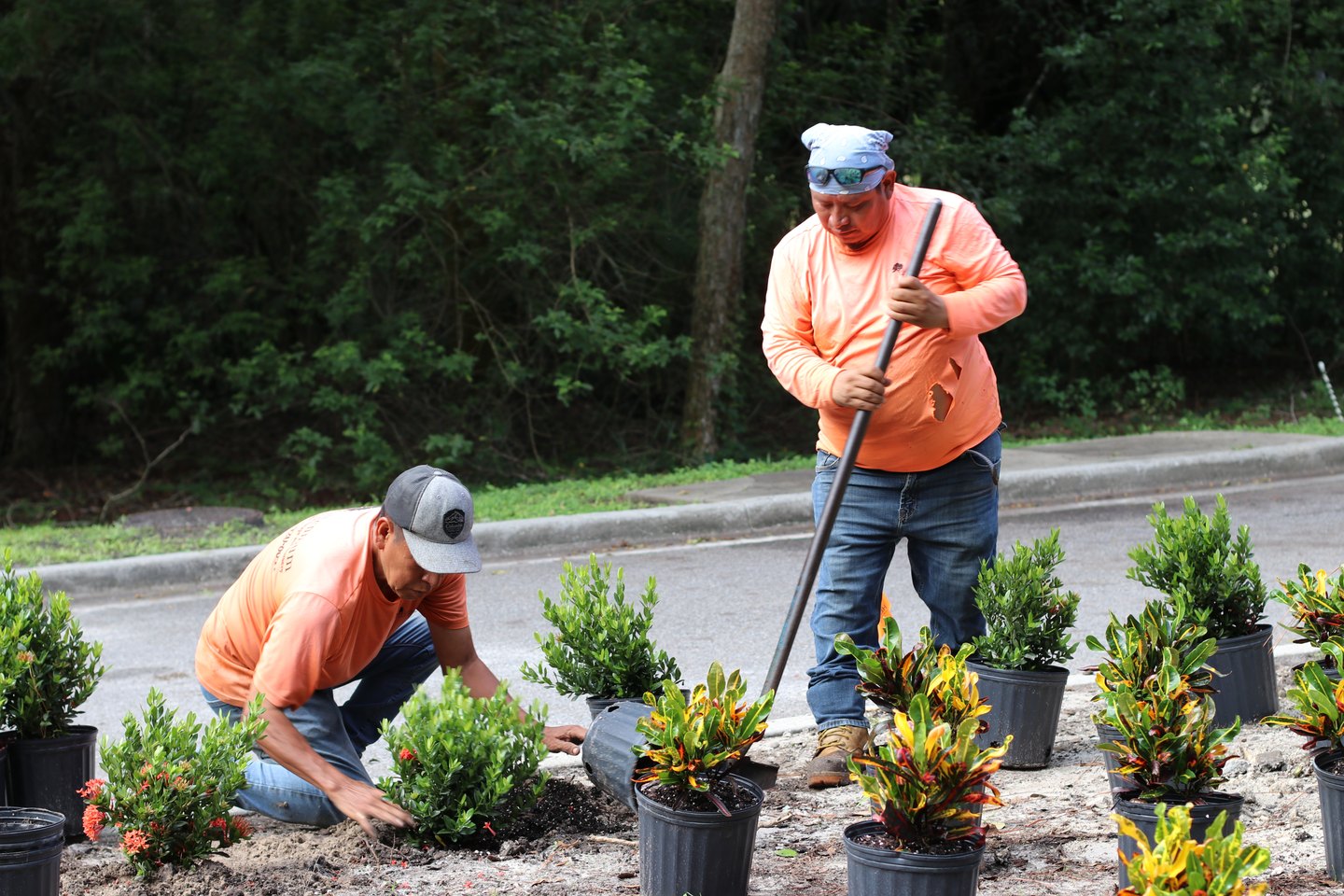
Because one team plans and builds the whole thing, the irrigation goes in before the beds, the pavers go in before the plants, and the plants come straight from our own nursery.
Landscaping rebates in Tampa Bay
If you're thinking about converting part of your lawn, some local programs may help pay for it. Each program is run separately, and the right one depends on your address and who supplies your water.
- City of Tampa: a Florida-Friendly Landscaping turf-conversion program with a reported rebate of up to $3,000 for converting up to 500 square feet of irrigated grass. Three workshops are required first.
- Unincorporated Hillsborough County: a separate county program that reimburses qualified expenses after a workshop series. The 2027 workshops are planned for March 13, April 17 and May 22.
- Pinellas County: the former turf-conversion pilot paid up to $2,000, but it isn't accepting applications right now.
- Pasco County: a free irrigation evaluation from UF/IFAS Extension Pasco, and regional sprinkler rebates for eligible customers.
- Tampa Bay Water Wise: rebates on high-efficiency nozzles, pressure-regulated spray bodies, rain sensors and WaterSense controllers for eligible homes on potable water, plus a separate smart controller program worth up to $250.
- HOAs and commercial properties: a customizable rebate that may cover up to 50% of eligible water-saving project costs, with a pre-inspection before work begins.
Most of these programs require workshops, prequalification or approval before you start, so check first and keep every receipt.
What rebate do you qualify for?
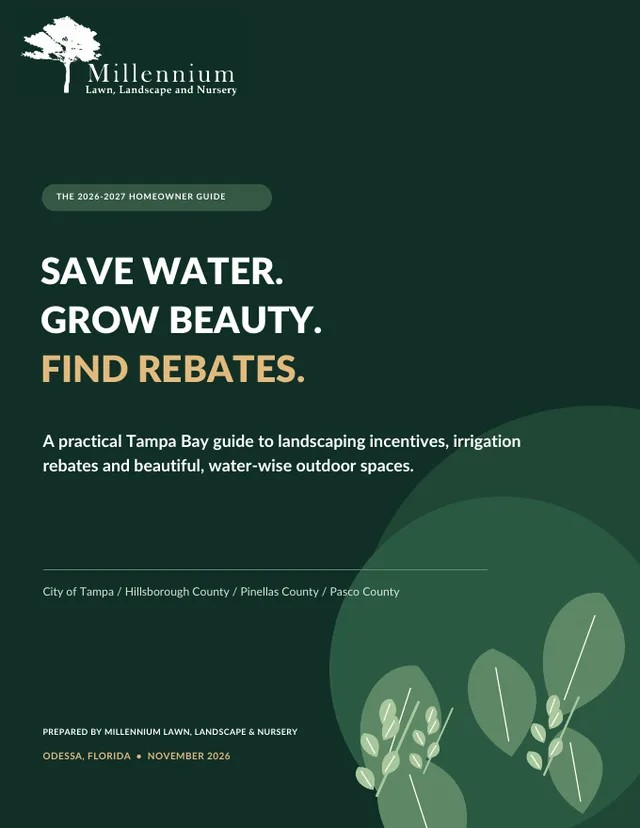
Take our 60-second quiz. Answer four quick questions about your property and we'll show you which programs may fit, then you can download our free 2026-2027 Rebate Book with every program, the paperwork each one needs and a five-step project plan.
Take the rebate quiz and download the Rebate Book
Rebates are run by public agencies and utility programs, and their rules and funding can change. Millennium doesn't guarantee eligibility or approval, so confirm the details with the program before you start work.
How to get started
- Walk your yard and mark the grass you use. Everything else is a candidate for beds, paths or Florida plants.
- Check your rebate options. Take the quiz before you buy anything, since most programs need approval first.
- Plan the irrigation with the design. Decide what stays on spray, what moves to drip and which heads get capped.
- Pick plants for the spot they'll live in. Sun, shade, wet or dry, and their size at maturity.
- Install in the right order: irrigation changes, then hardscape, then plants and mulch, then the lawn you're keeping.
Frequently asked questions
Can I keep some grass and still save water?
Yes. Keep the lawn where you actually use it and convert the hard-to-water, rarely used areas to planting beds, mulch and hardscape. A smaller lawn is easier to keep healthy on one watering day a week.
Do I have to redo my sprinkler system?
Usually it means adjusting it. Lawn areas can stay on spray heads or rotors, new beds move to drip or micro irrigation, and heads that no longer have grass to water get capped or moved.
What plants work best in a Florida-friendly yard?
Plants suited to your sun, soil and drainage. Coontie, muhly grass, firebush, Walter's viburnum, dwarf yaupon holly, Simpson's stopper and American beautyberry are reliable choices in our area. You can see them in person at our nursery in Odessa.
Is there a rebate for replacing my lawn?
Possibly. The City of Tampa and unincorporated Hillsborough County each have a turf-conversion program, and Tampa Bay Water Wise offers sprinkler and controller rebates for eligible homes. Take our rebate quiz to see what may fit your property.
Can one company really handle the whole project?
Yes. Millennium has its own nursery, landscape designers and crews, hardscape crews and irrigation specialists, so one team plans and builds the whole yard.
When is a good time to start?
Now through spring works well. The heat has broken, new plants have the cooler months to root in before summer, and the 2027 rebate workshops start in March.
Let's plan your more Floridian yard
As our water changes, our landscaping can too. If you'd like help deciding what to keep, what to change and which rebates may apply, schedule a free estimate or call us at (813) 920-8041.