

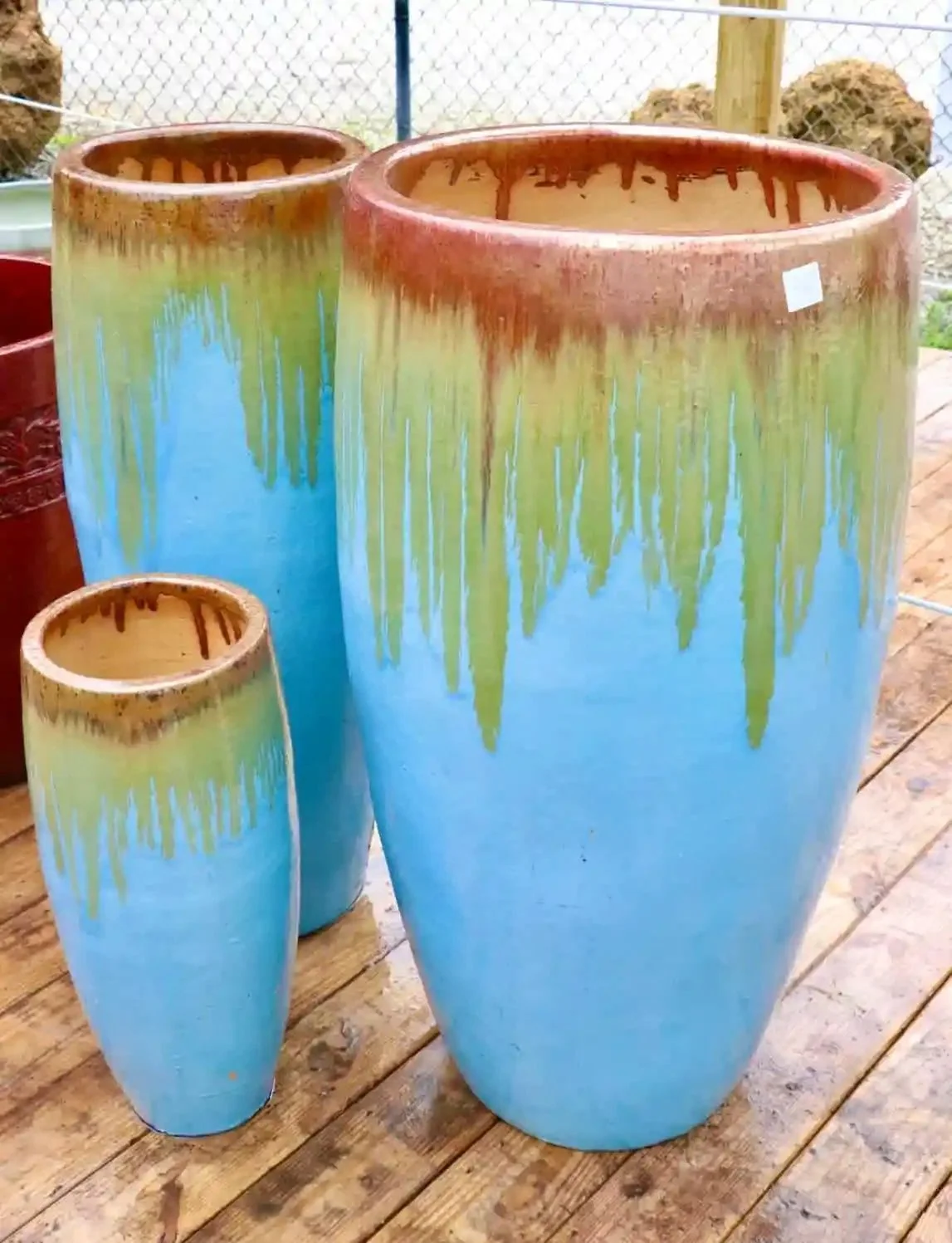
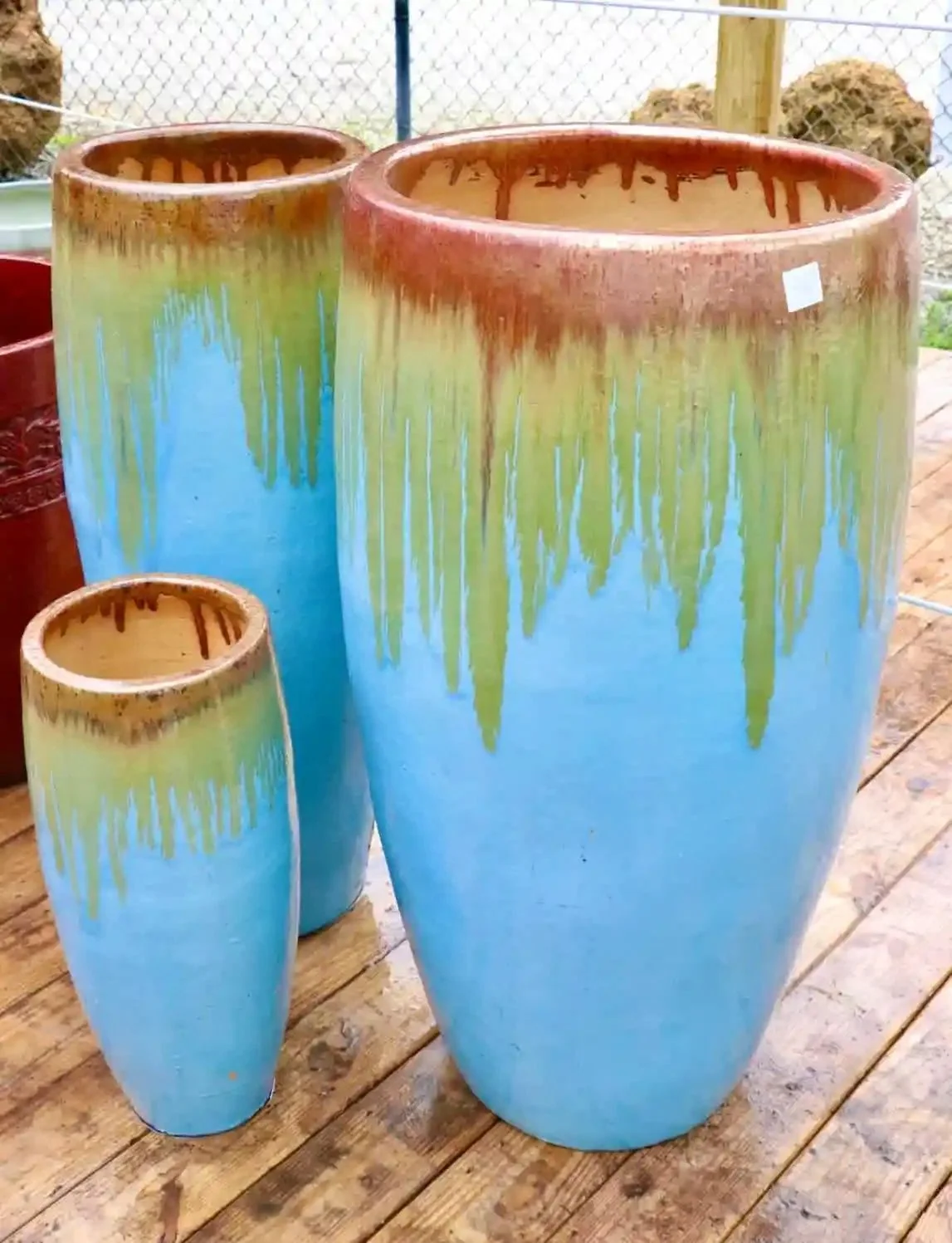
Few things finish a Florida garden the way a well-placed pot or a softly trickling fountain does. They draw the eye, add height and structure to a bed, and bring a sense of calm to a patio or courtyard. The trick is choosing pieces that look the part and can also stand up to our intense sun, summer heat, and daily afternoon downpours. Here is what we tell customers when they walk our nursery looking for the right one.
Start with the material
Material is the single biggest factor in how a pot or fountain performs in Florida. Each one has a personality, and a few real trade-offs.
Terracotta
Classic, warm, and timeless, terracotta is the look most people picture when they think of garden pots. Because it is porous, it breathes, which helps roots avoid sitting in soggy soil during the rainy season. That same porosity is its weakness, though. Terracotta dries out faster in the heat, so plants in it need more frequent watering, and on the rare cold snap it can chip or crack if water soaks into the clay and freezes. It is a beautiful, breathable choice as long as you do not mind watering a little more often.
Glazed ceramic
Glazed ceramic is where Florida gardens really come alive with color. The glaze seals the surface, so these pots retain moisture far better than bare terracotta, which means less frequent watering through the summer. The deep blues, greens, and earth tones hold up well to UV, and the glaze resists staining. They are a touch heavier and the glaze can chip if a pot takes a hard knock, but for a pop of lasting color they are hard to beat.
Concrete
Concrete is the workhorse. It is heavy, durable, and almost impossible to blow over, which makes it ideal for fountains, statuary, bird baths, and large anchor pieces that need to stay put through a storm. That weight is the catch: once a big concrete piece is placed, it is staying there, so plan its spot before you set it. Sealing concrete every couple of years keeps it from absorbing water and helps it weather our humidity gracefully.
Poly, fiberglass, and plaster
Modern weather-resistant pots, often called poly or resin, give you the look of stone or glazed clay at a fraction of the weight. They are easy to move, will not chip the way ceramic can, and shrug off UV and rain, which makes them great for balconies, rooftops, and anywhere weight matters. Lightweight plaster and cast pieces fall in a similar lane and offer fine detail for decorative accents. Just remember that lighter pots can tip in high wind, so weight the base or pick a heavier material for exposed, breezy spots.
Millennium displays a large selection of pottery, fountains, statuary, and bird baths, all priced and on display to the public at our 20-acre Odessa nursery. It is the easiest way to see the real color, size, and weight before you commit. Browse our pottery and fountains selection to see what we carry.
Get the size and scale right
A pot that looks generous in the nursery can shrink the moment it lands on a wide patio, so think about scale relative to its surroundings, not just the plant. As a rule, taller and a little bigger than you think usually reads better than too small. A single oversized urn can do more for a courtyard than a scattering of little pots that disappear against the house.
When you do group pots, odd numbers almost always look more natural than even ones. Try clustering three or five in varied heights, repeating a color or material so the grouping feels intentional rather than random. Fountains follow the same logic: give a fountain room to be the focal point and resist crowding it with too much around the base.
Drainage, sun, and the Florida climate
Drainage is non-negotiable in a state that can dump an inch of rain in twenty minutes. Make sure any planter has a drainage hole, or be ready to drill one, and lift pots slightly on feet or risers so water flows out freely instead of pooling and rotting roots. A layer of gravel at the bottom is not a substitute for a real hole, but raising the pot off the ground always helps.
For sun and UV, glazed and poly finishes hold their color the longest, while very dark pots can heat up enough to stress roots in full afternoon sun. Frost is rarely a concern here, but on those few cold nights, porous terracotta is the most vulnerable, so it is worth moving small clay pots under cover when a freeze warning comes through. The same drought-tolerant thinking we bring to plantings applies to containers, and you can read more about that on our nursery page.
Fountain basics: anchoring and pumps
A fountain adds sound and movement that masks road noise and invites birds, but it needs a level, stable base. Set fountains on a firm, level pad so the basin sits flat and the water cascades evenly rather than running off one side. Heavier concrete fountains stay put on their own; lighter pieces benefit from being anchored or set into a paver base so wind and curious pets do not topple them.
The pump is the heart of any fountain. Most garden fountains use a small recirculating pump that pulls from the lower basin and pushes water back to the top, so you simply top off the water as it evaporates. Keep the basin clean and the water level above the pump intake so it never runs dry, which is the fastest way to burn out a pump. Tuck the cord and plan for a nearby outlet before you place the fountain, not after.
Come see it in person
Photos only tell you so much. Color, glaze, weight, and scale all read differently in your hand, which is why we keep a large, walkable selection of pottery, fountains, statuary, and bird baths on display at the nursery, every piece priced and ready to go home with you. Our team can help you match a pot to a plant, find a fountain that fits your space, and load it up when you are ready.
Millennium Lawn, Landscape & Nursery is a certified woman-owned, family-operated business serving Greater Tampa Bay for more than 25 years from our 20-acre nursery at 12032 Tarpon Springs Rd in Odessa. Stop by, or call us at (813) 920-8041 with any questions.